Hands-free voice control
Use supported voice commands to lock footage or take a snapshot without reaching for the camera. English, Mandarin Chinese, Russian and Japanese are supported. Spoken alerts also flag memory-card errors and setting changes.

£289.95
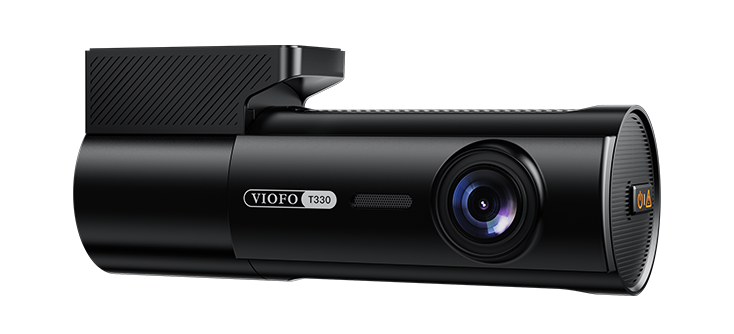
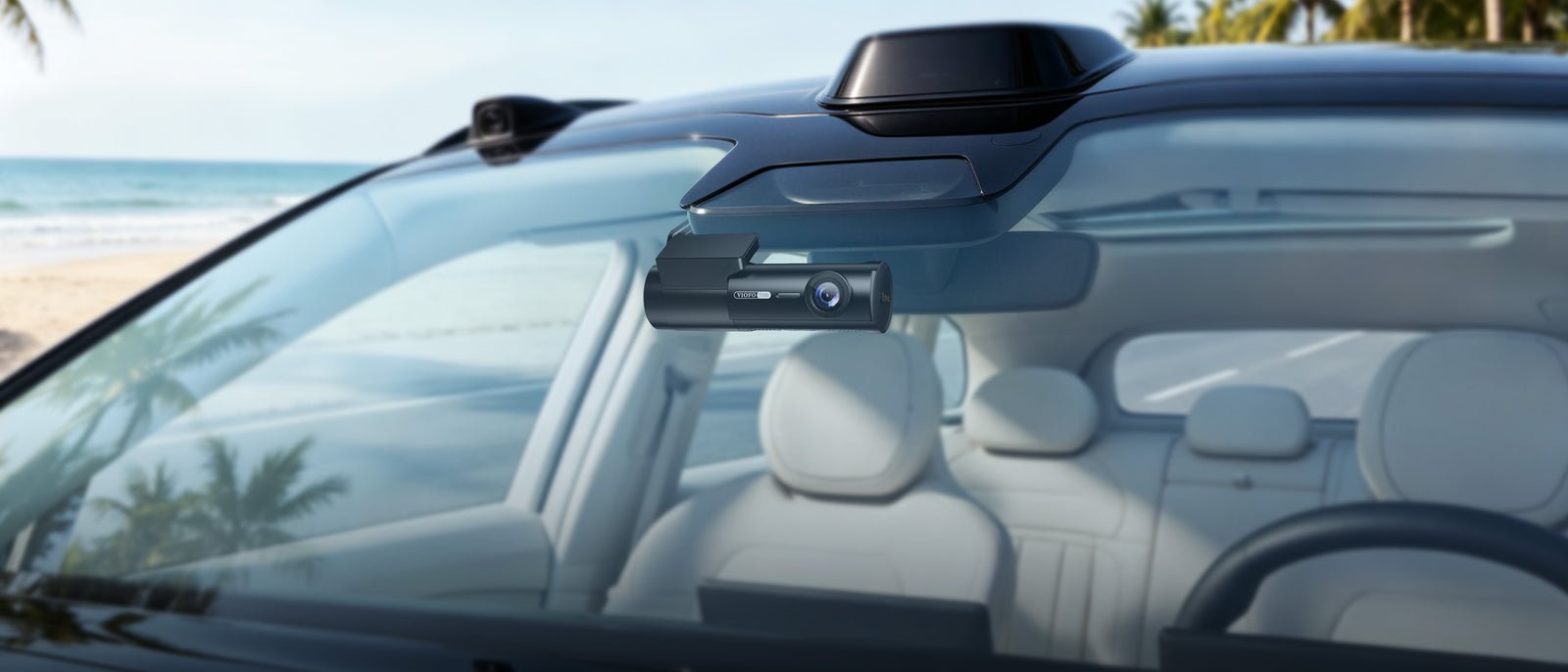
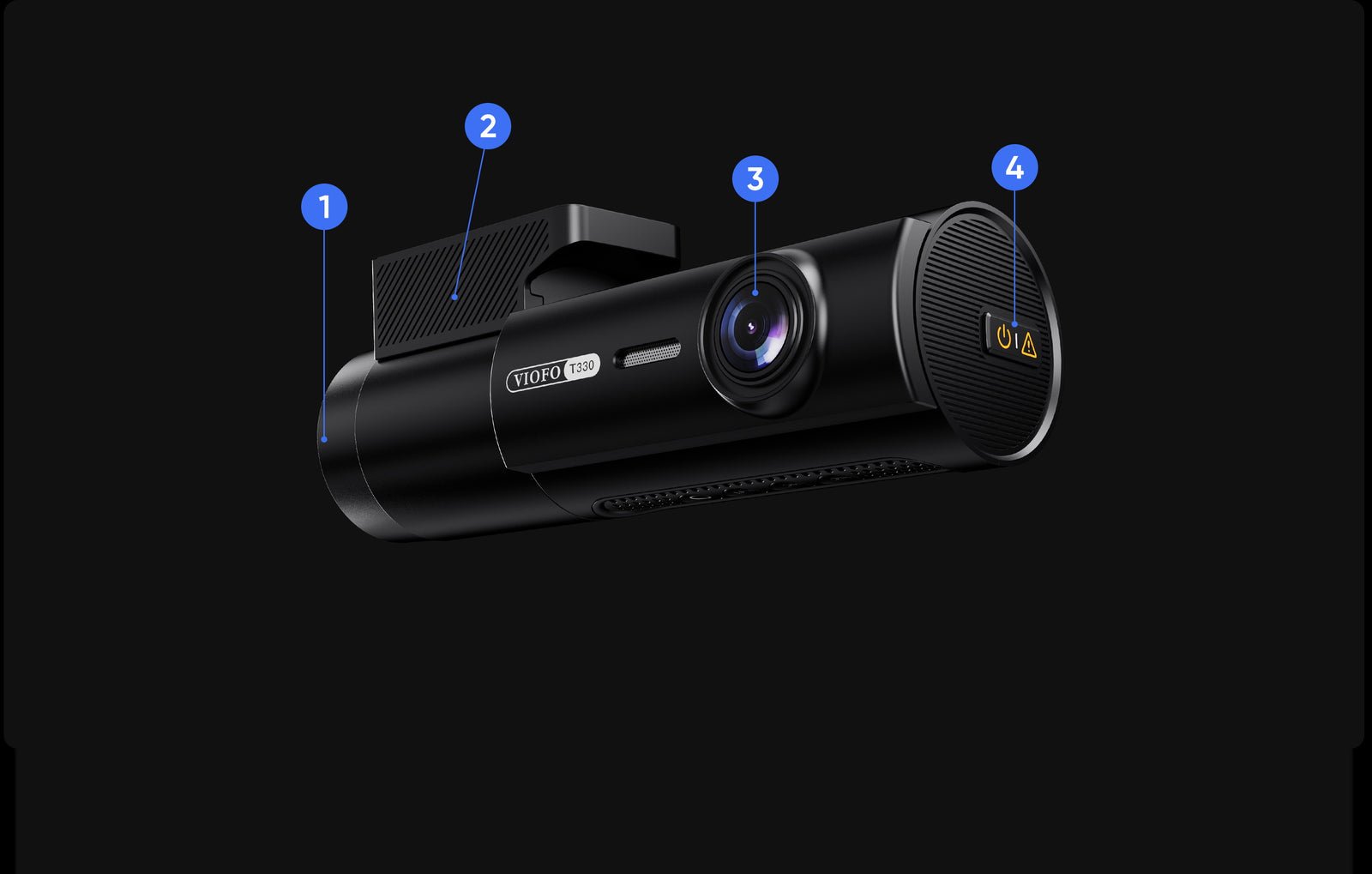
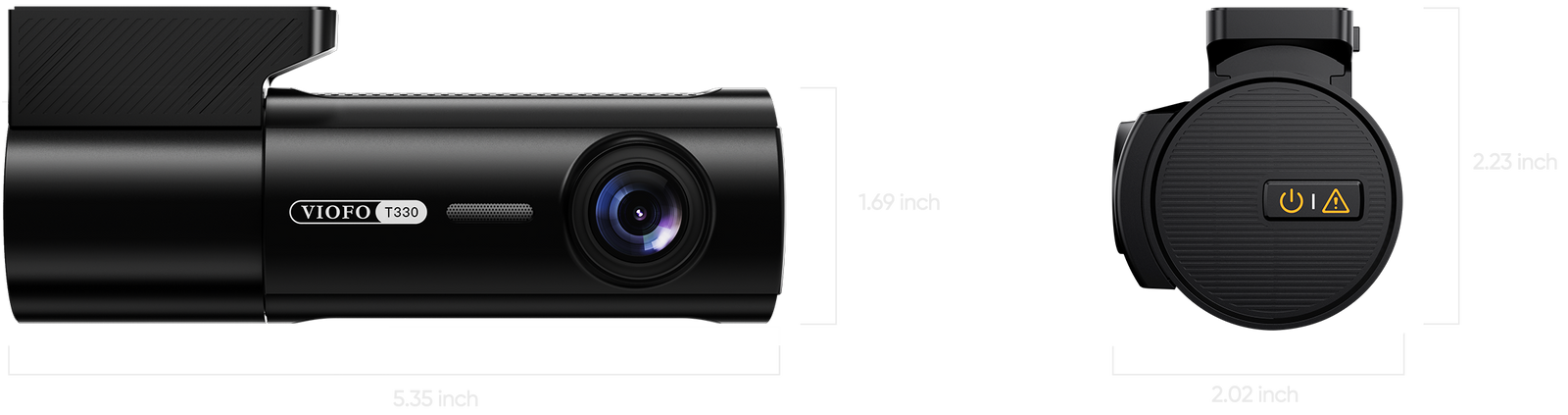
A compact, screenless front camera sits high on the windscreen. Configure the camera and save footage through the VIOFO Dashcam App.

Front: 4K 30fps with HDR; 4K up to 60fps with HDR off.
The front camera uses the 8MP Sony STARVIS 2 IMX678 sensor, an F1.8 lens and a 140° field of view. It records the wider road scene, including lane positioning, traffic and activity around an incident. The sensor helps retain detail as daylight fades; HDR balances bright headlights and darker areas. Readable number plates still depend on distance, movement and lighting.

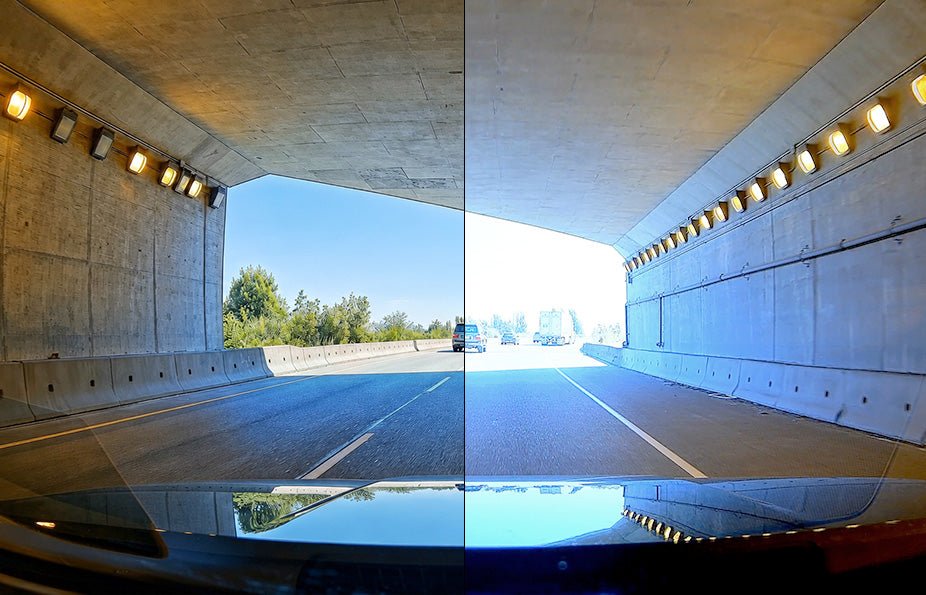
HDR balances bright and dark areas of the scene, helping retain road detail when headlights, strong backlighting or a tunnel exit make exposure difficult. It can help preserve number-plate detail, although distance, movement and lighting still affect what can be read.
Choose 4K 60fps with HDR off for smoother motion, or 4K 30fps with HDR on for difficult lighting. On this single-camera configuration, HDR applies to the front view.
Watch the official HDR comparison video (opens in a new tab)
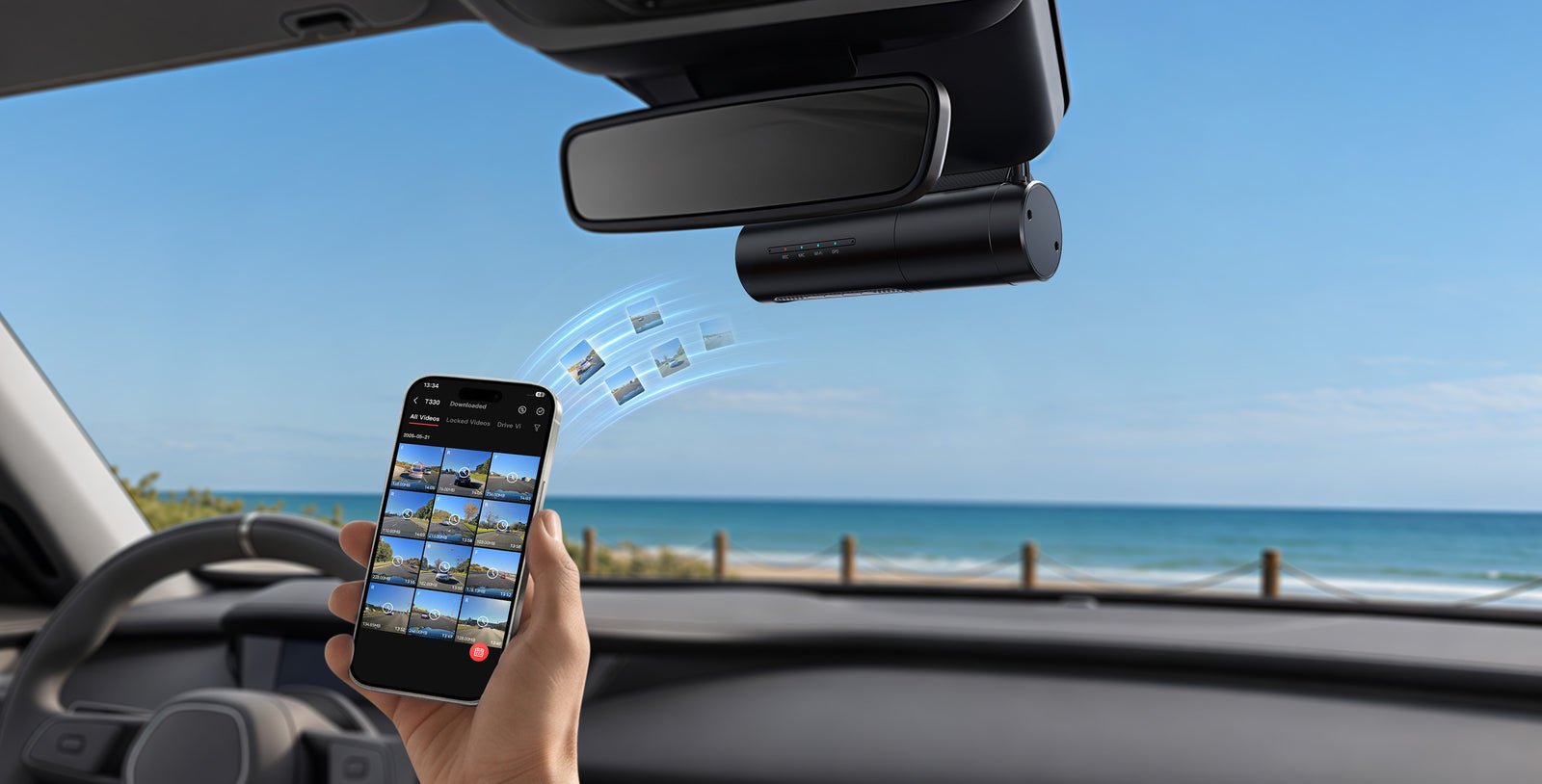
Connect your phone using 2.4GHz or 5GHz Wi-Fi 6 to preview footage, adjust settings and download recordings through the VIOFO Dashcam App. This is a local connection to the camera, rather than a mobile-data connection for remote fleet monitoring.

Use supported voice commands to lock footage or take a snapshot without reaching for the camera. English, Mandarin Chinese, Russian and Japanese are supported. Spoken alerts also flag memory-card errors and setting changes.
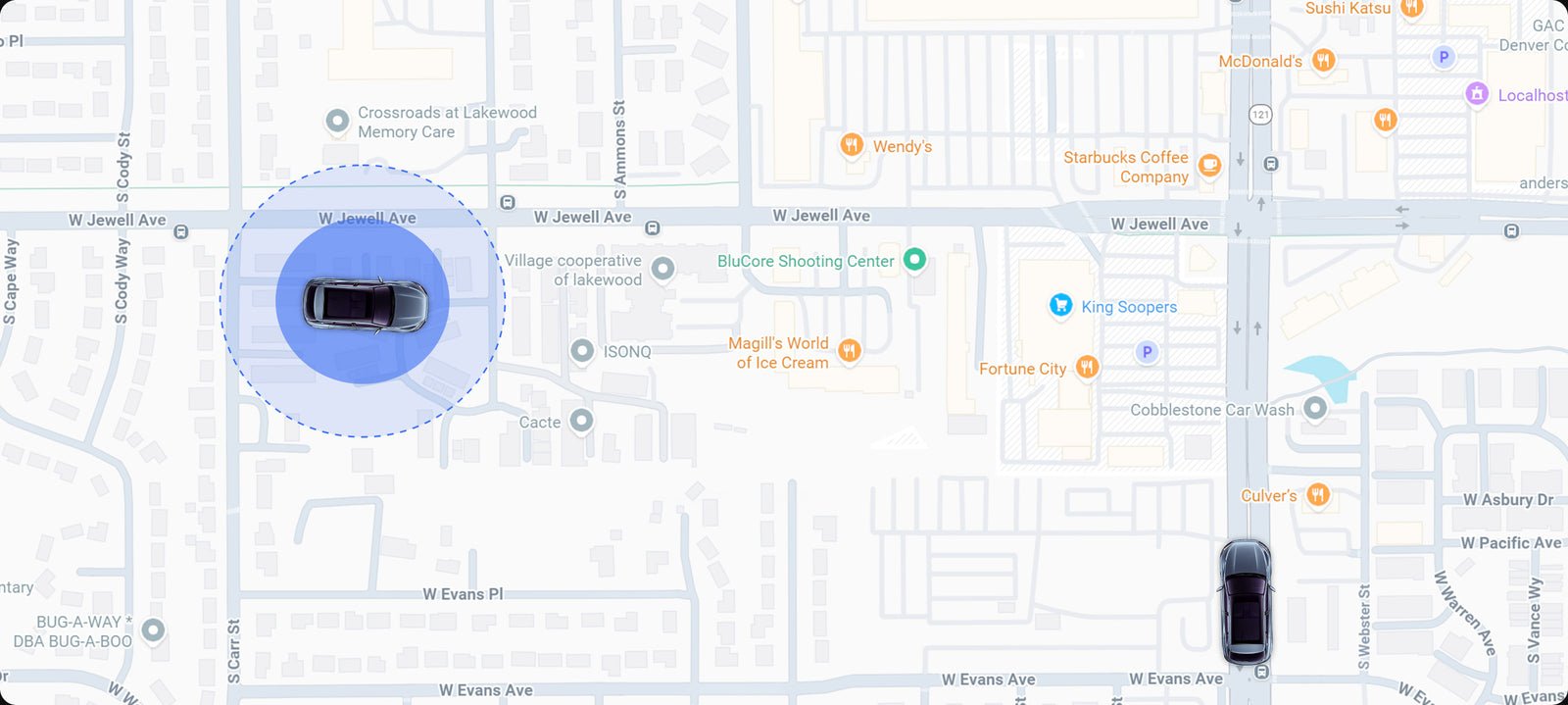
GPS, BeiDou, Galileo and GLONASS record location, speed and time information for playback, giving useful context alongside the footage.
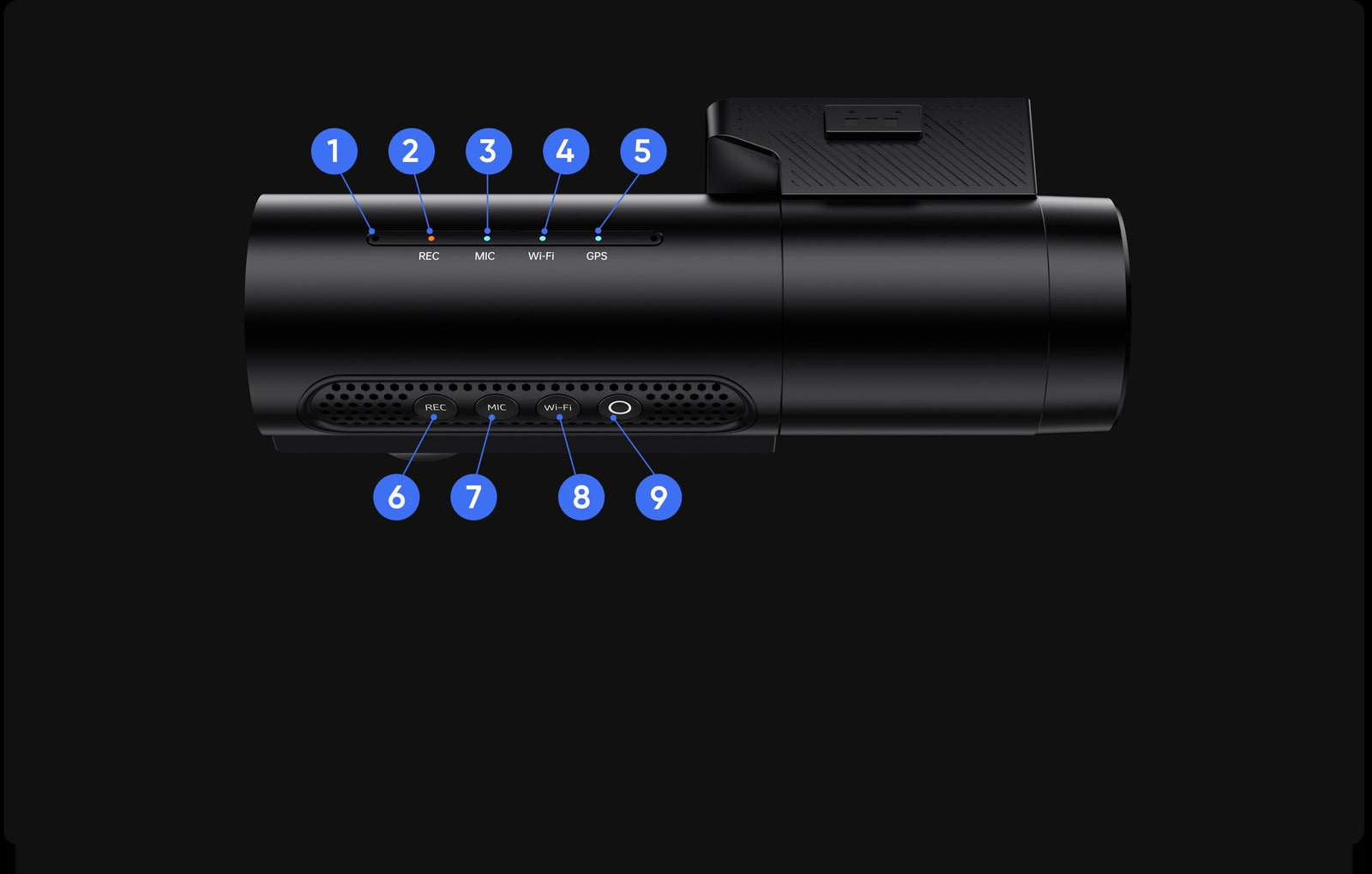
Loop recording reuses older unlocked footage when the card fills. The G-sensor can protect an impact recording automatically, and the side button lets you lock an important clip manually.
Start with time-lapse, low-bitrate or auto-event recording, then switch to Low Power Impact Detection when your chosen time limit or battery-voltage threshold is reached. Voltage-based switching requires the optional HK6-F hardwire kit.

Define locations such as your garage or workplace where the camera should shut down instead of entering parking mode. If you still want impact monitoring in those zones, enable Low Power Impact Recording. Super Night Vision is available within the standard parking treatment to help with low-light parking footage.

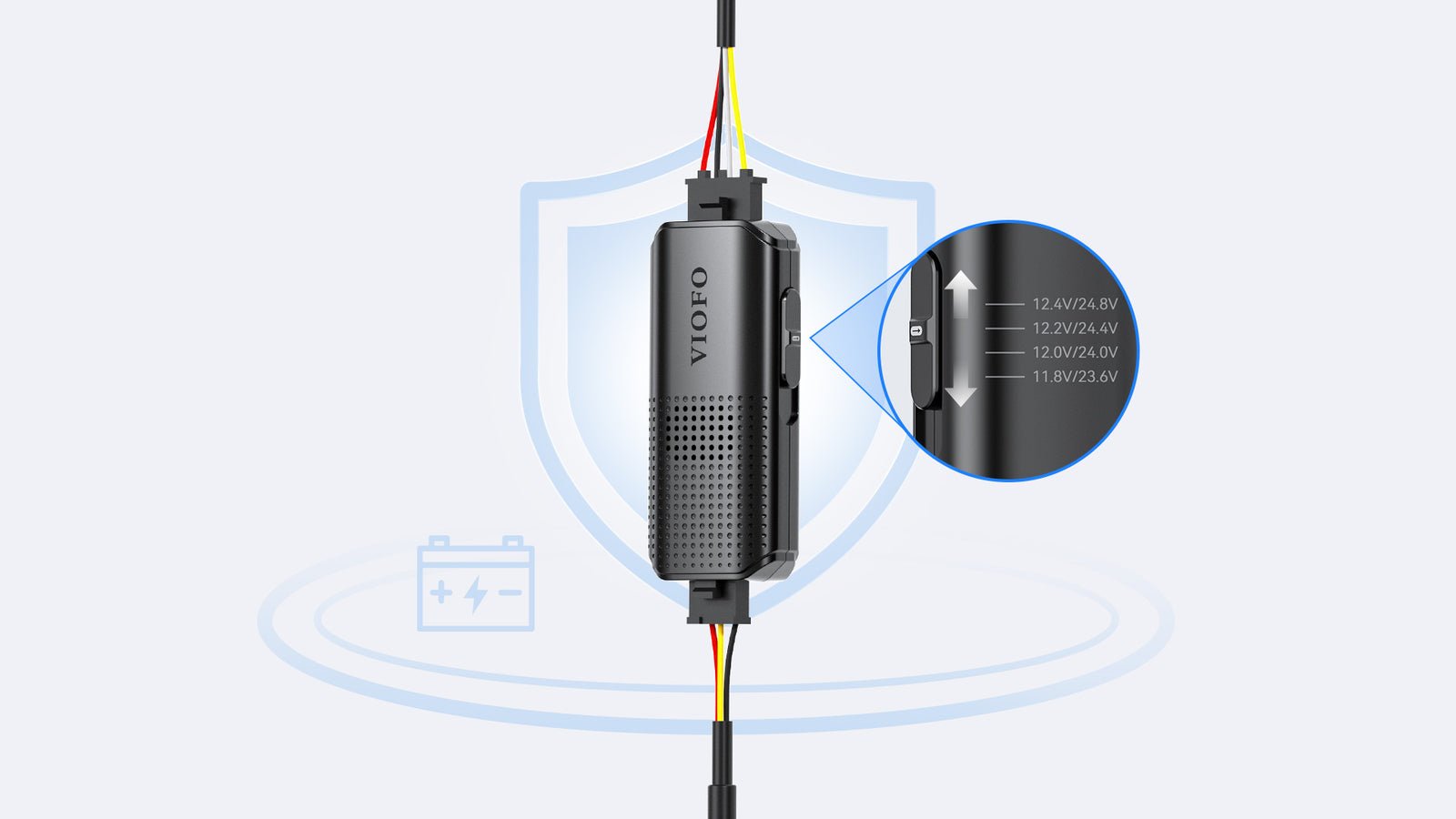
The optional HK6-F connects the camera to the vehicle fuse box for parking recording. Low-voltage cut-off helps protect the vehicle battery. Its detachable design supports installation and servicing, and Bluetooth voltage display lets you view the vehicle voltage. A hardwire kit is sold separately.

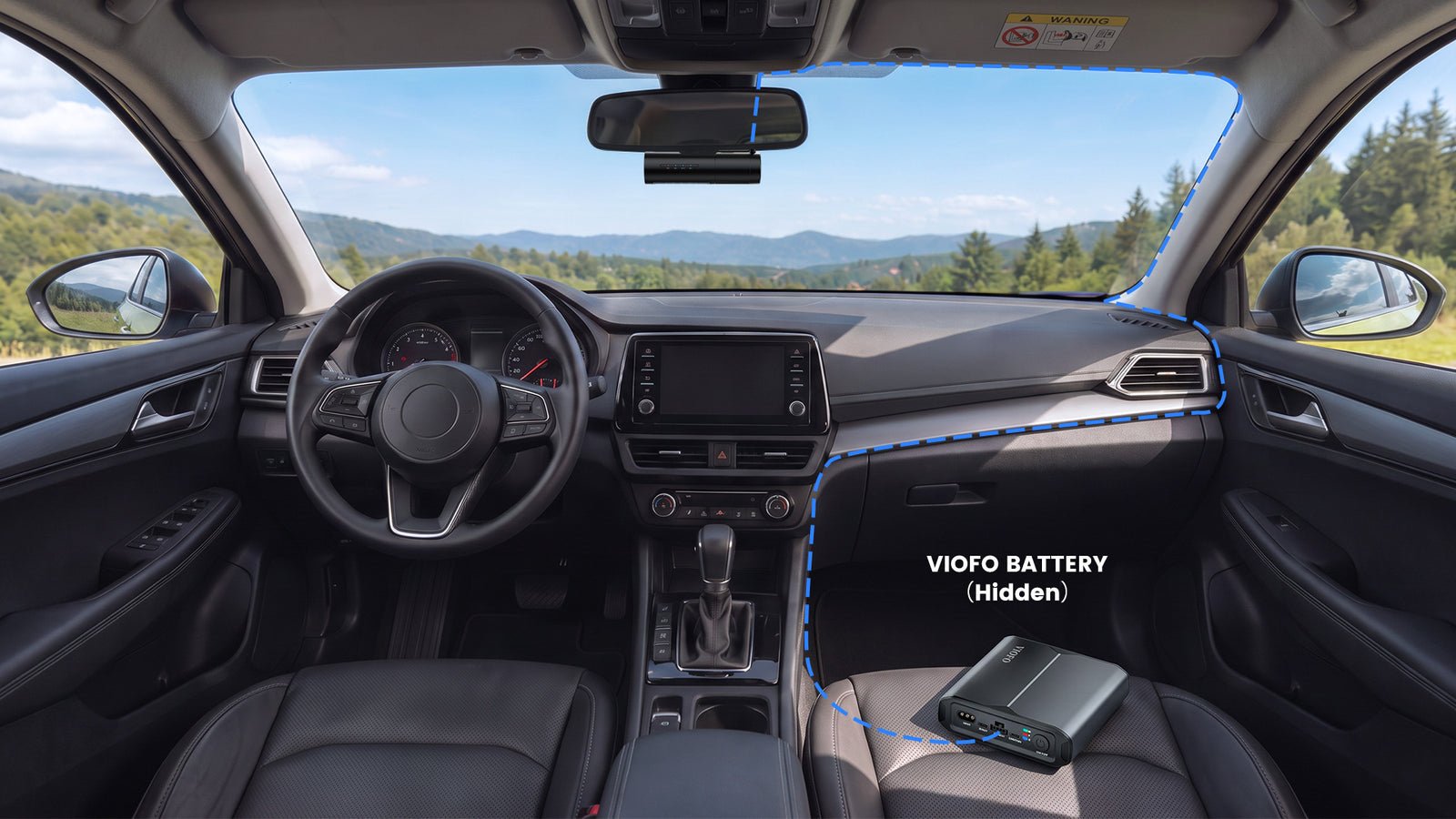
A compatible VIOFO BP60 or BP100 battery pack can power parking recording from its own stored energy instead of drawing directly on the vehicle battery while parked. Battery level can be viewed in the app and stamped on footage; a battery-capacity cut-off can control the change to low-power protection. Select a 5%, 8%, 10% or 15% reserve so impact detection can remain available after continuous parking recording ends. Runtime depends on camera settings and battery capacity. Battery packs are sold separately.

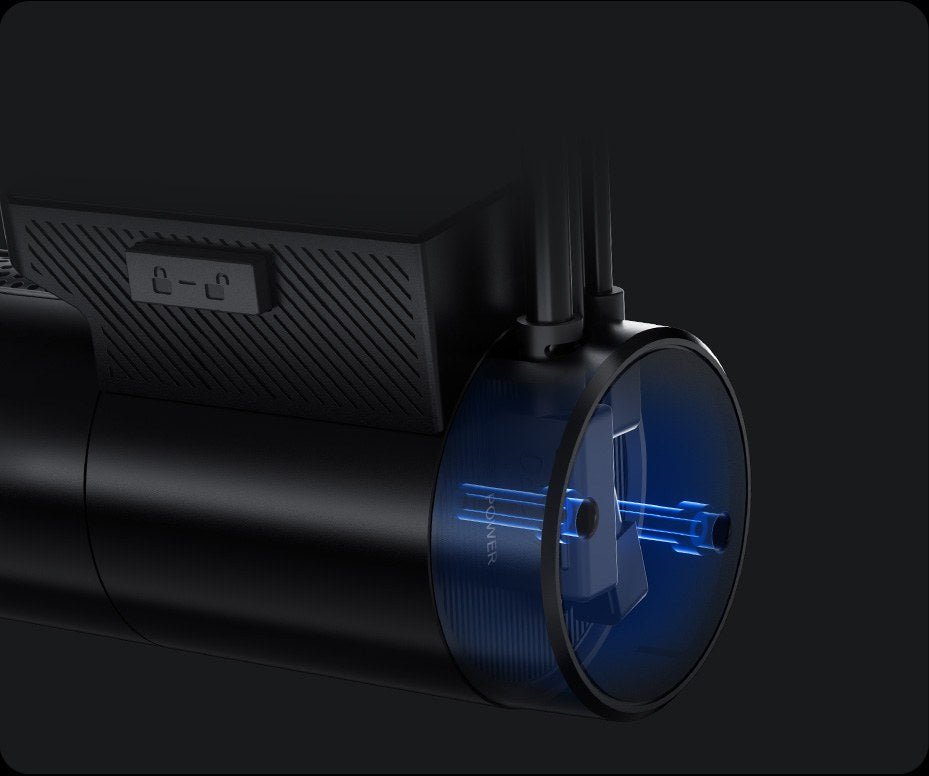
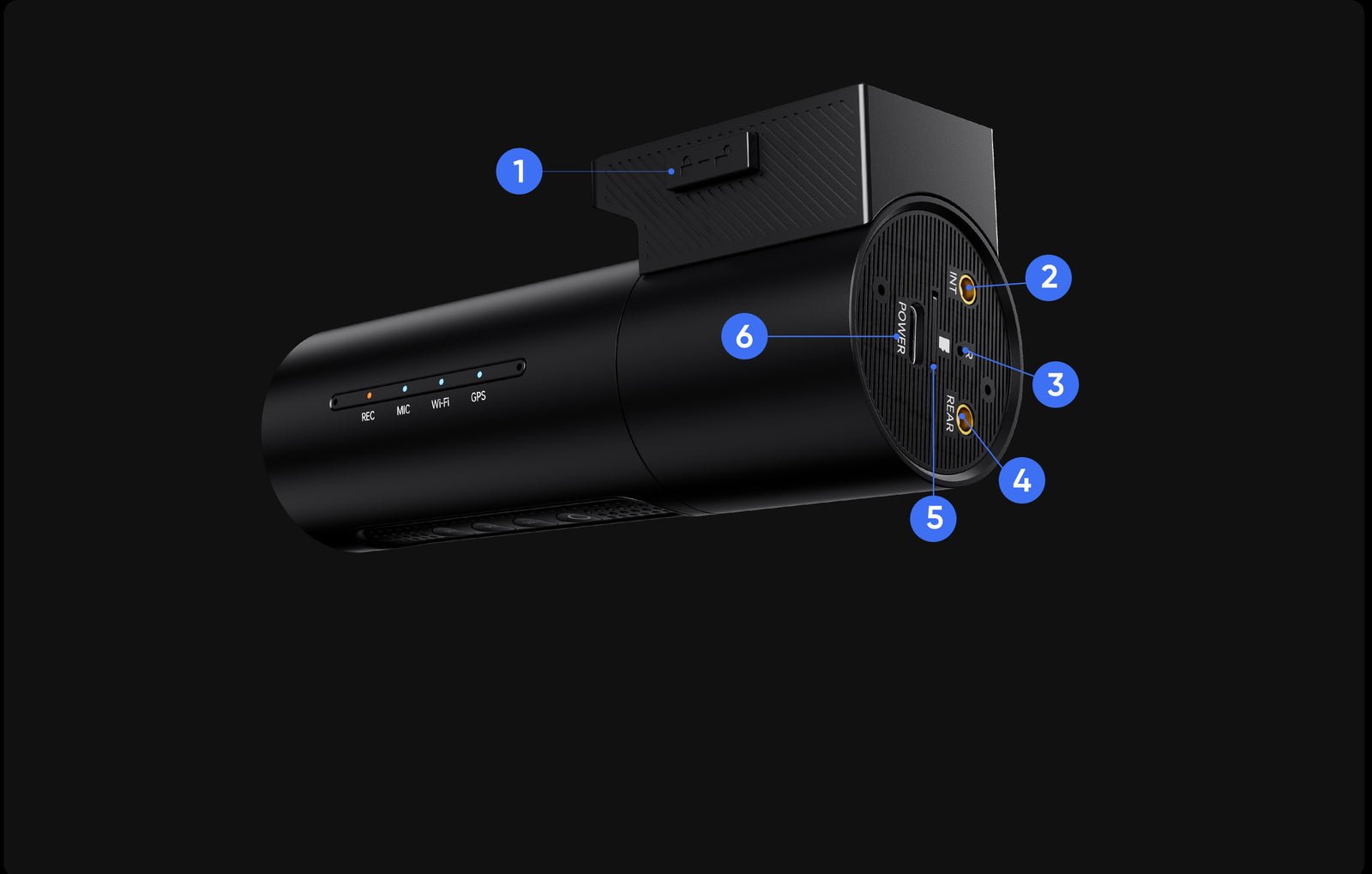
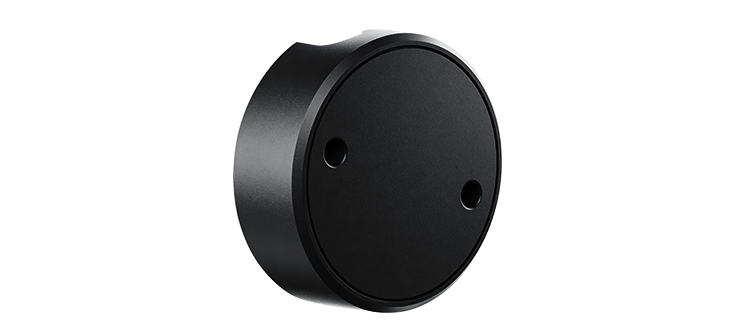
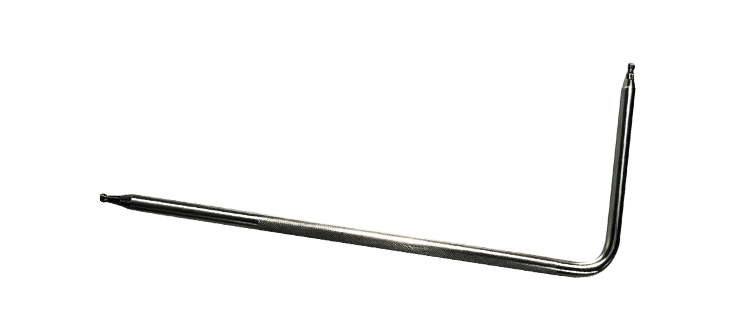
The included tamper-resistant cover, four screws and hex key help protect the connections against accidental or unwanted disconnection. Position and route the power cable so it does not obstruct the driver’s view or vehicle safety systems. Check the included cable lengths and route before fitting.

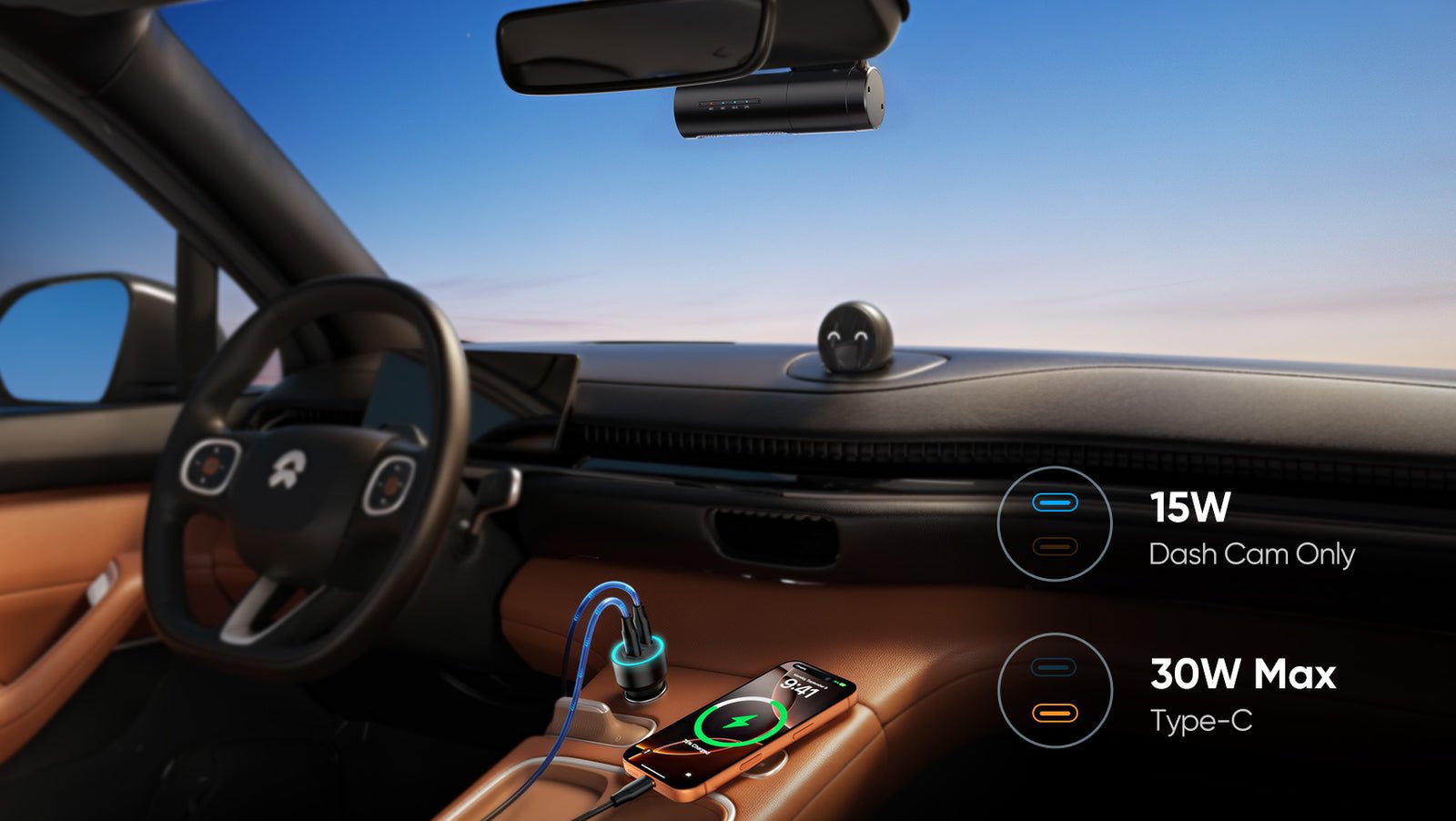
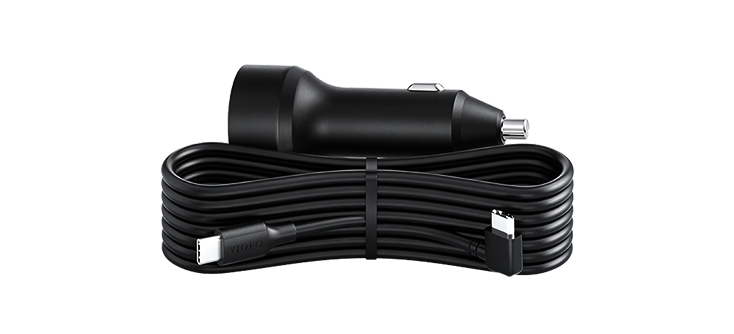
The included charger has a 30W fast-charging Type-C port for a device and a 15W port for the dash camera. Its illuminated ring helps locate the ports in the dark. Connect the dash camera to its dedicated port: the orange port will not power it.

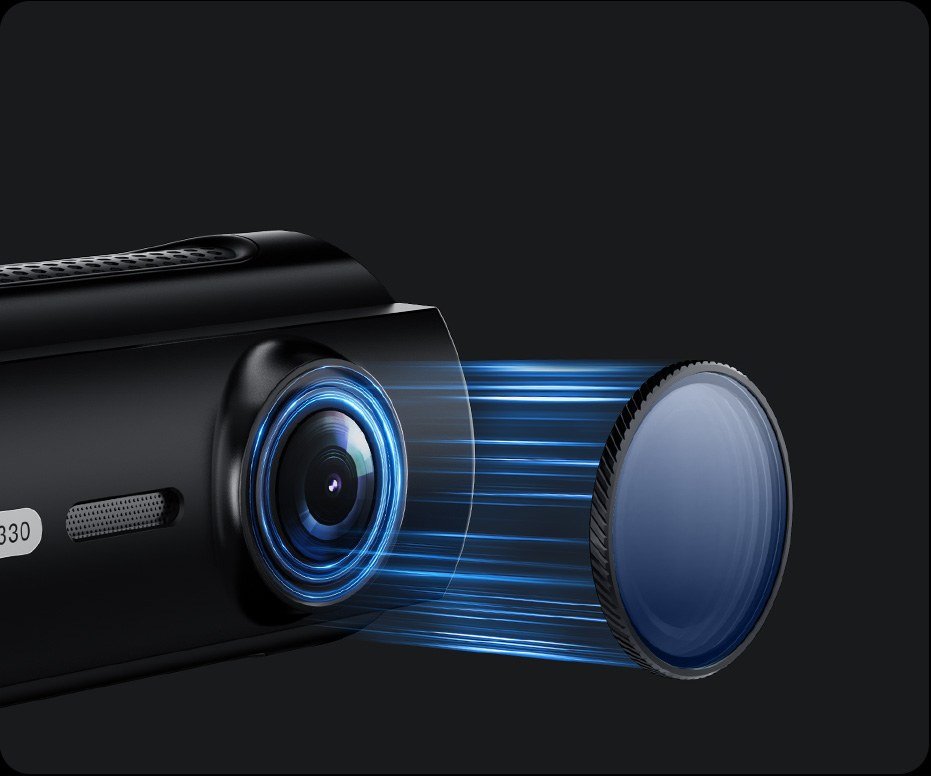
The front camera comes with a snap-on CPL-700 polarising filter to reduce windscreen reflections and glare. Adjust the filter to suit the installation rather than assuming reflections will disappear in every situation.

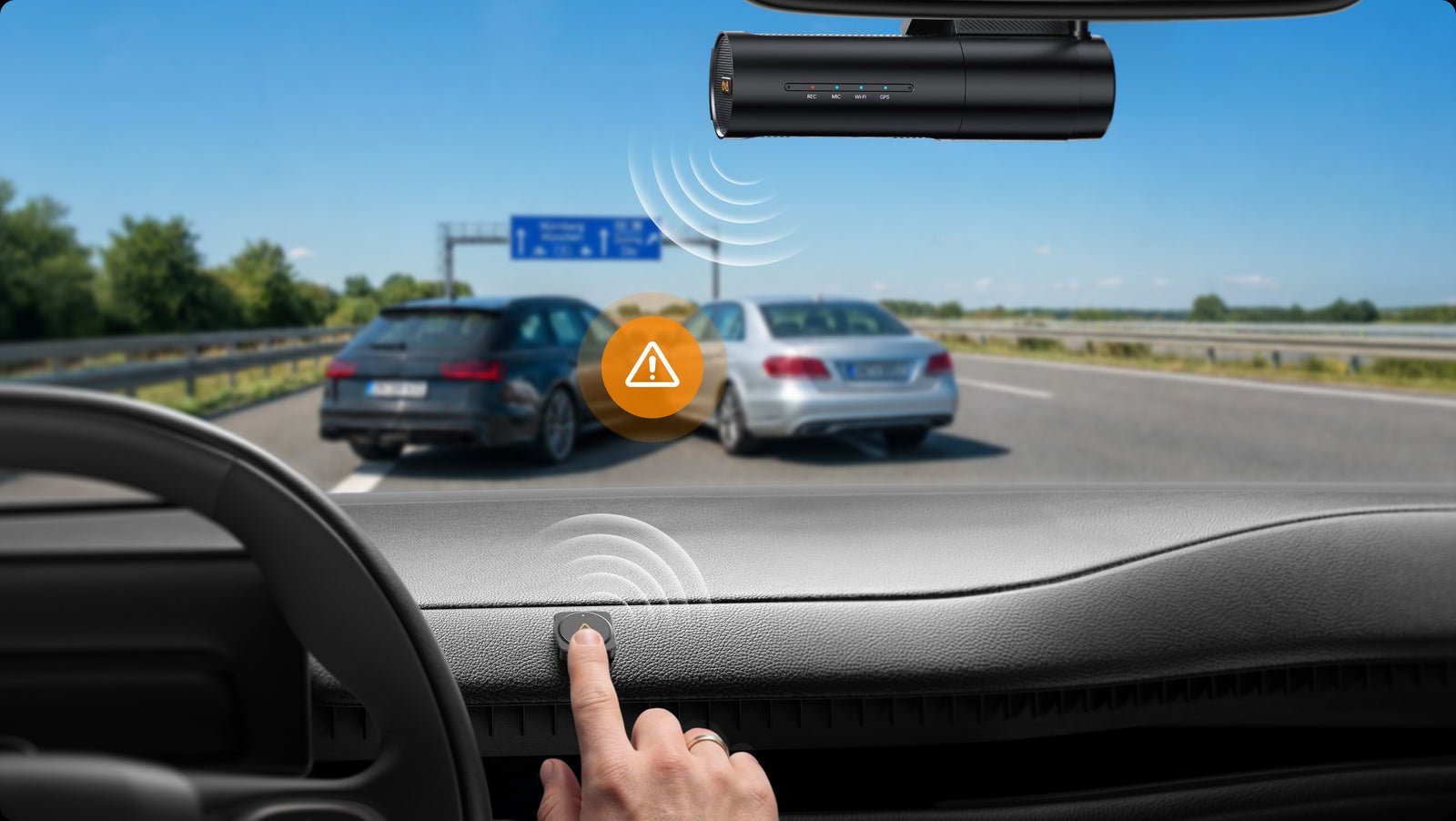
The optional BTR200 Bluetooth remote provides one-press footage locking and configurable shortcut buttons. Built-in Bluetooth supports the remote at a range of up to 5m. The camera’s own side button and G-sensor also protect important recordings.

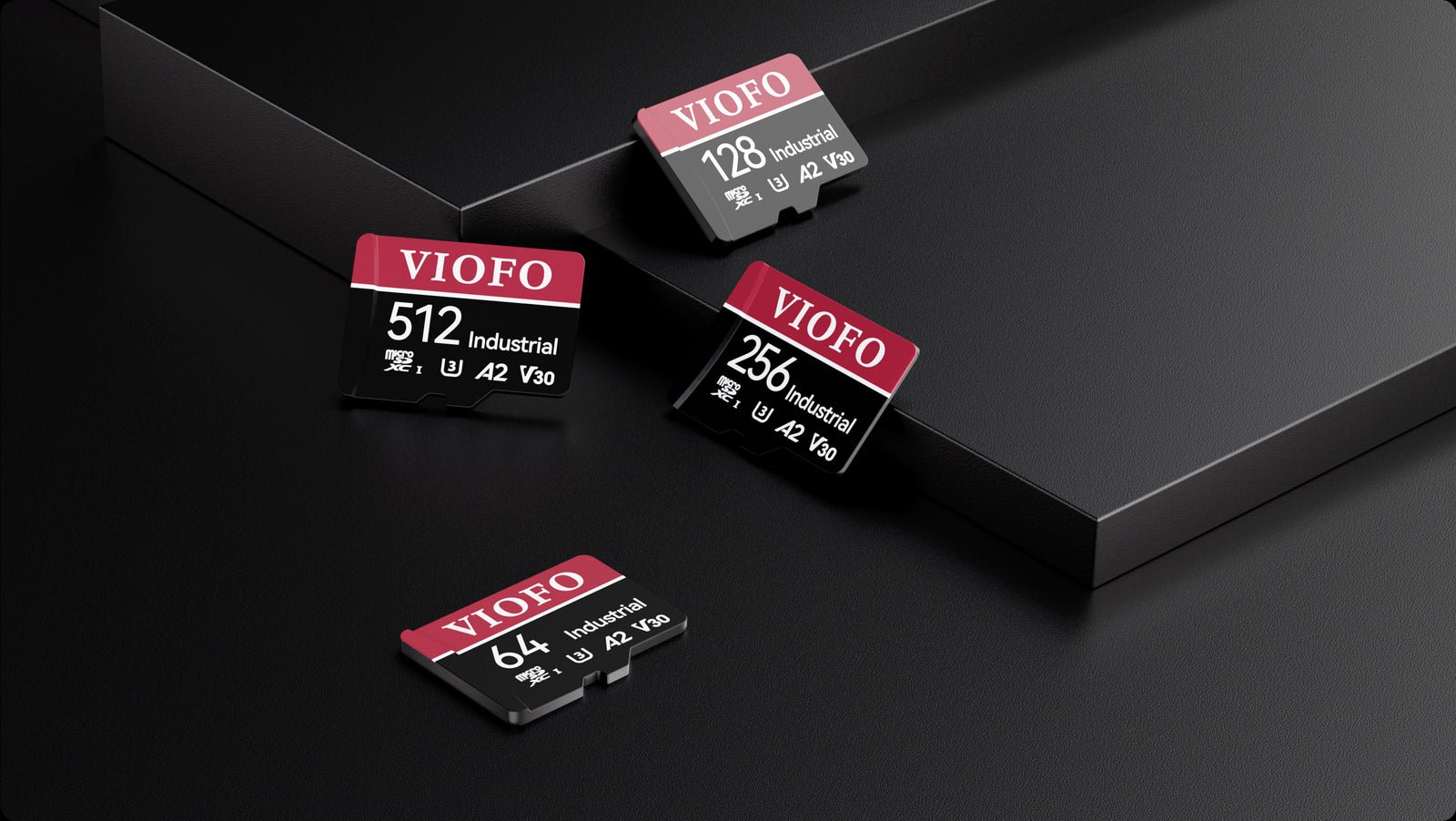
The T330 supports microSD cards up to 512GB, sold separately. A high-endurance card designed for sustained dash-cam use is important for continuous dash-cam recording. The camera uses a supercapacitor rather than an internal rechargeable battery, so it needs an external power supply to record.

This official series video shows the wider T330 range, including configurations with other cameras. Check this listing’s included cameras and specifications when ordering.

Front Camera × 1
Car Charger × 1 (Length: 3.5 m)
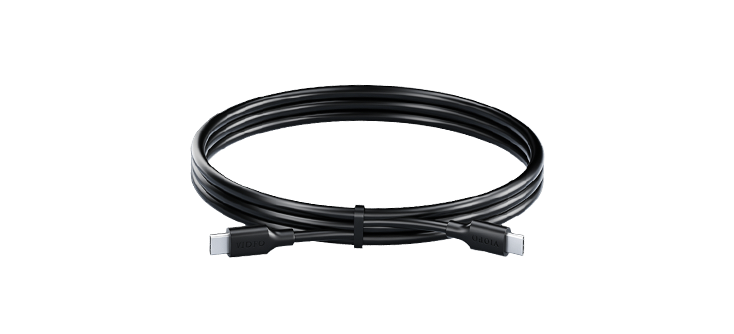
Type-C Data Cable × 1 (Length: 0.5m)
Front Camera CPL × 1
Spare Mount Sticky Pads (Set) × 1
Windscreen Static Stickers × 3
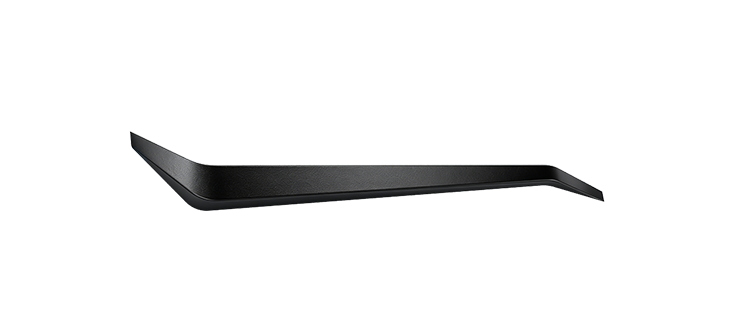
Trim Removal Tool × 1
Tamper-Resistant Cover × 1
Tamper-Resistant Cover Screws × 4
Hex Key × 1
After-Sales Service Card × 1
Warning Sticker × 1
Quick Start Guide × 1
User Manual × 1This single-channel listing includes the screenless front camera only. A rear, cabin or telephoto camera is not supplied.
Front: 4K 30fps with HDR; 4K up to 60fps with HDR off. HDR support: Front HDR (4K 30fps).
Normal driving uses the included charger. For parking recording from the vehicle fuse box, add the optional HK6-F. A compatible BP60 or BP100 battery pack can supply parking power instead. Hybrid, low-power impact, auto-event, time-lapse and low-bitrate parking modes are supported.
Wi-Fi 6 connects a nearby phone to the camera using 2.4GHz or 5GHz. It does not provide a mobile-data connection for remote viewing over the internet.
Use a high-endurance microSD card up to 512GB, sold separately. Loop recording replaces older unlocked clips when the card fills; event locking protects selected recordings.
The camera uses a supercapacitor rather than a rechargeable recording battery. It needs an external power supply while recording.

Copyright © 2026 VIOFO UK. All rights reserved
Looks like you haven't made a choice yet.