
No products in the basket.
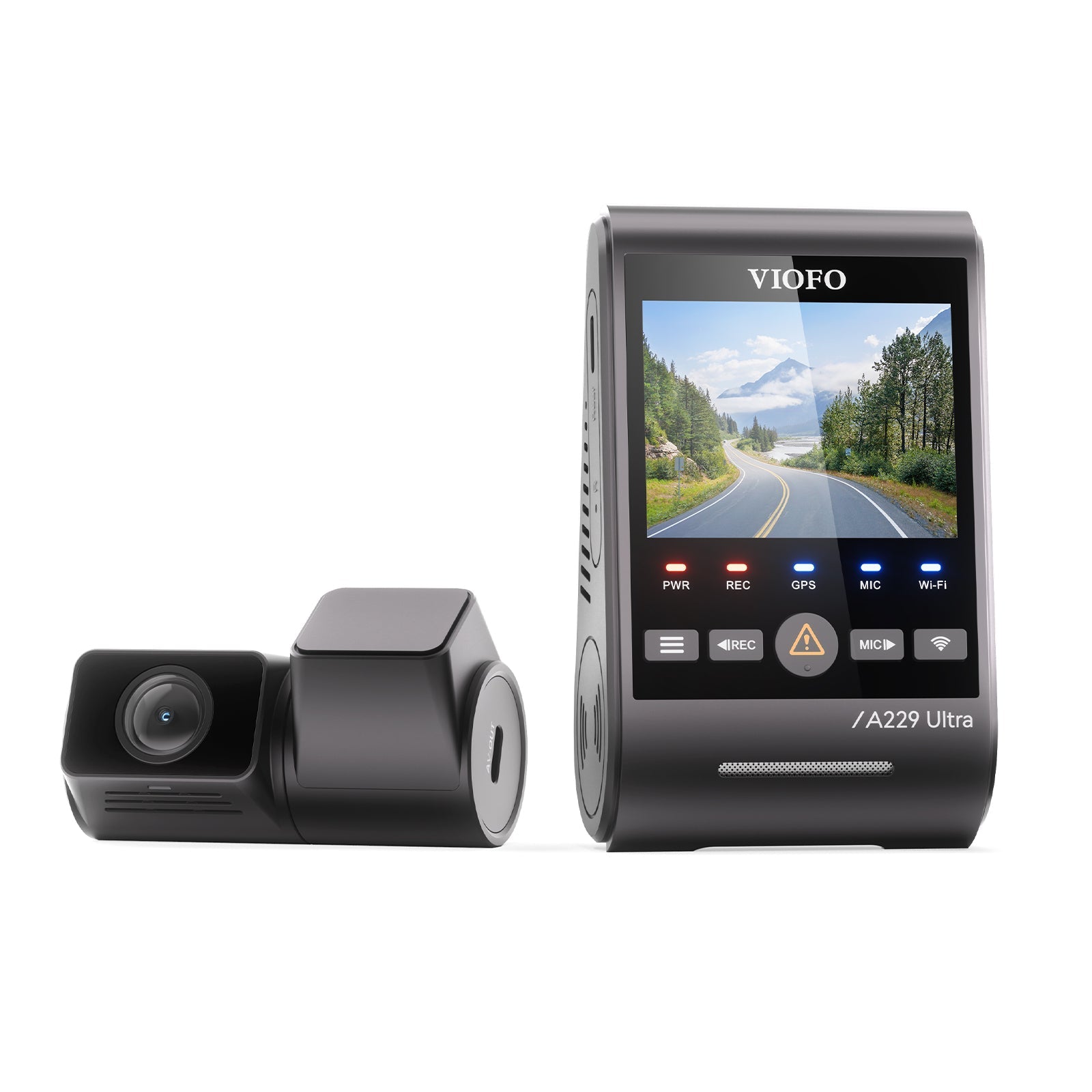


True 4K front + true 4K rear
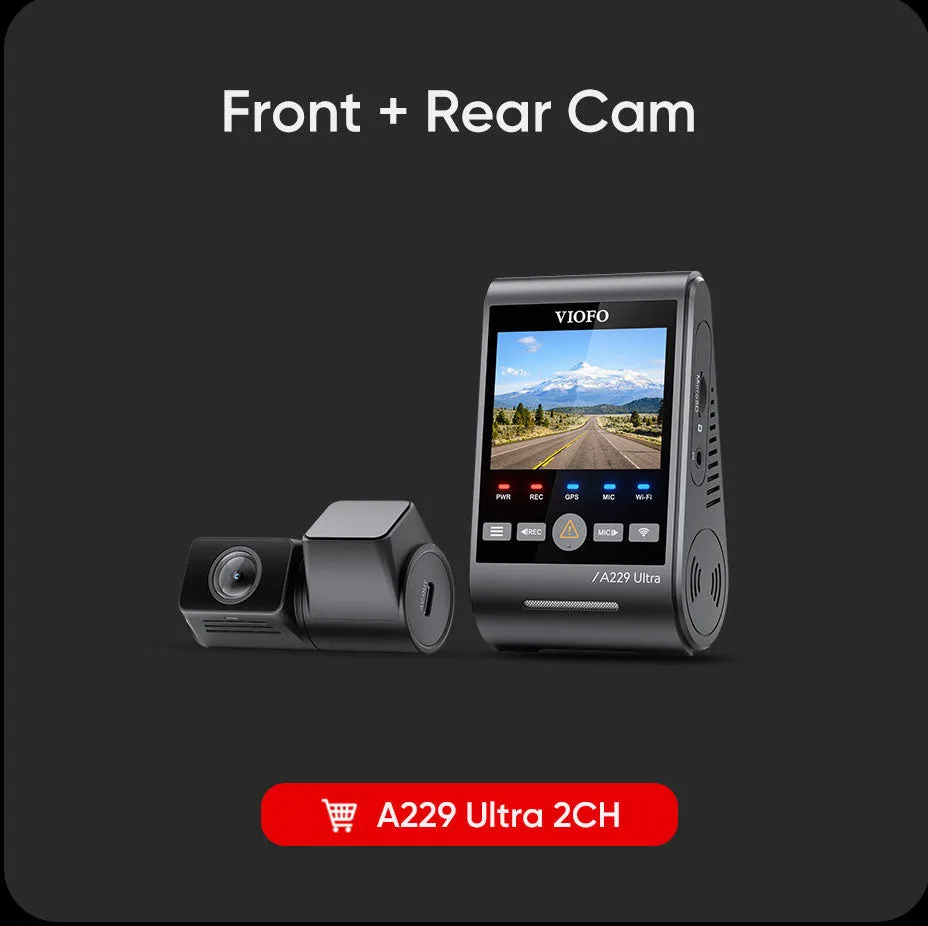
The A229 Ultra 2CH records true 4K from both the front and rear cameras at the same time. Both channels use Sony STARVIS 2 IMX678 8MP sensors, so the rear view gets the same native 4K resolution and HDR capability as the road ahead.

Most two-channel systems step down in resolution at the rear. The A229 Ultra uses an 8MP IMX678 sensor at both ends, recording 4K HDR front and rear simultaneously.
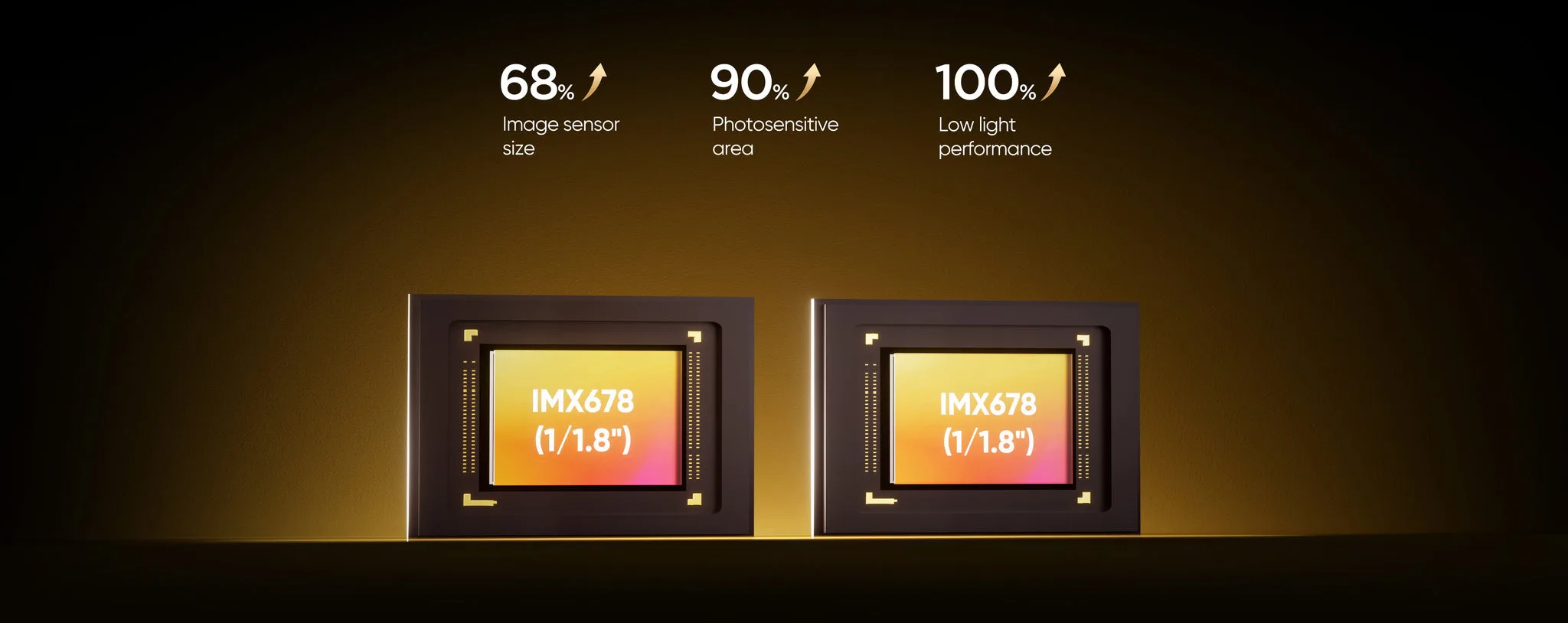
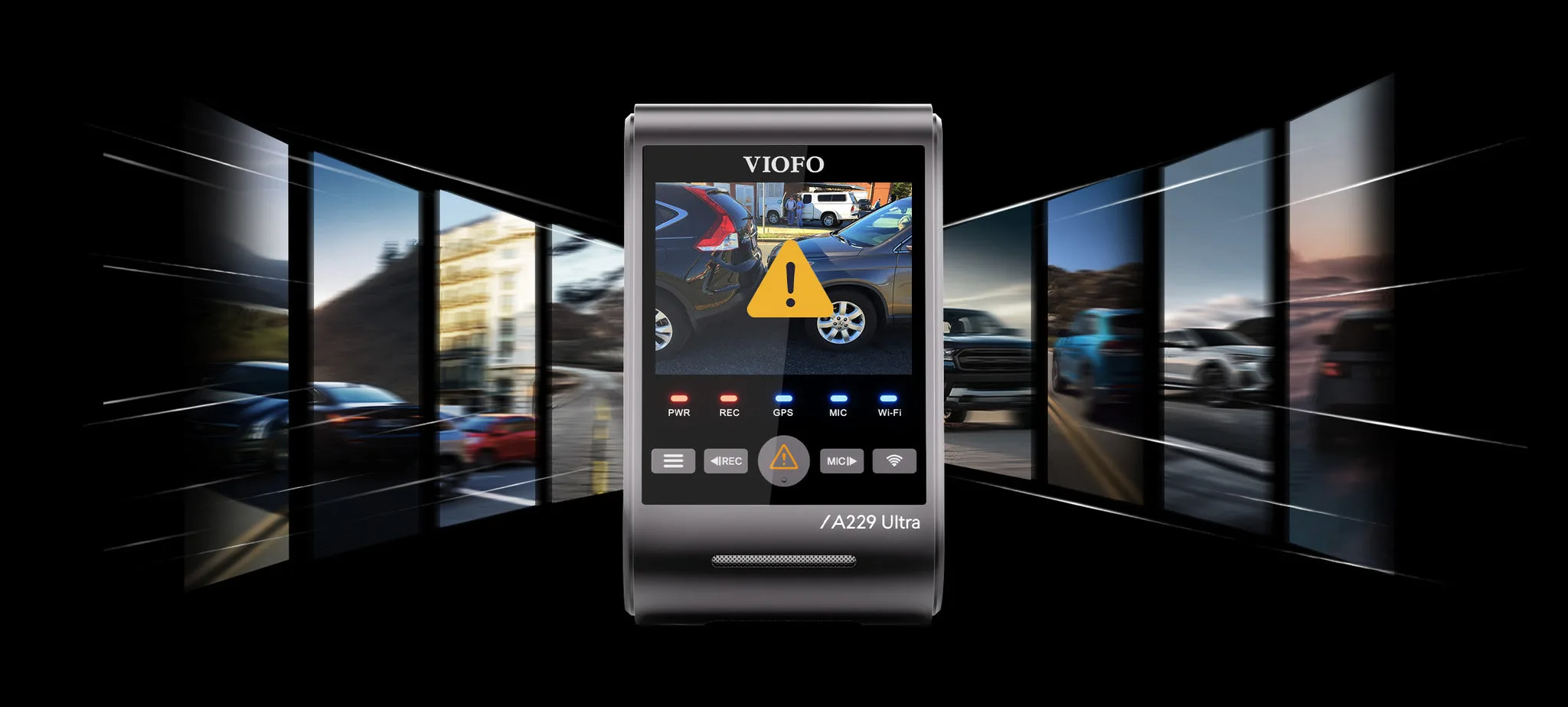
Both cameras use a 1/1.8-inch Sony STARVIS 2 IMX678 8MP sensor and a 140° field of view. Front and rear record native 4K at 30fps with HDR, so the rear channel does not step down in resolution.
3840×2160 at 30fps from an 8MP Sony STARVIS 2 IMX678 sensor, with a 140° field of view and F1.8 aperture.
The rear camera uses the same 8MP IMX678 sensor, 3840×2160 recording, 140° field of view and F1.8 aperture.
Both channels can record at 4K 30fps at the same time, rather than reserving the highest resolution for the front camera only.
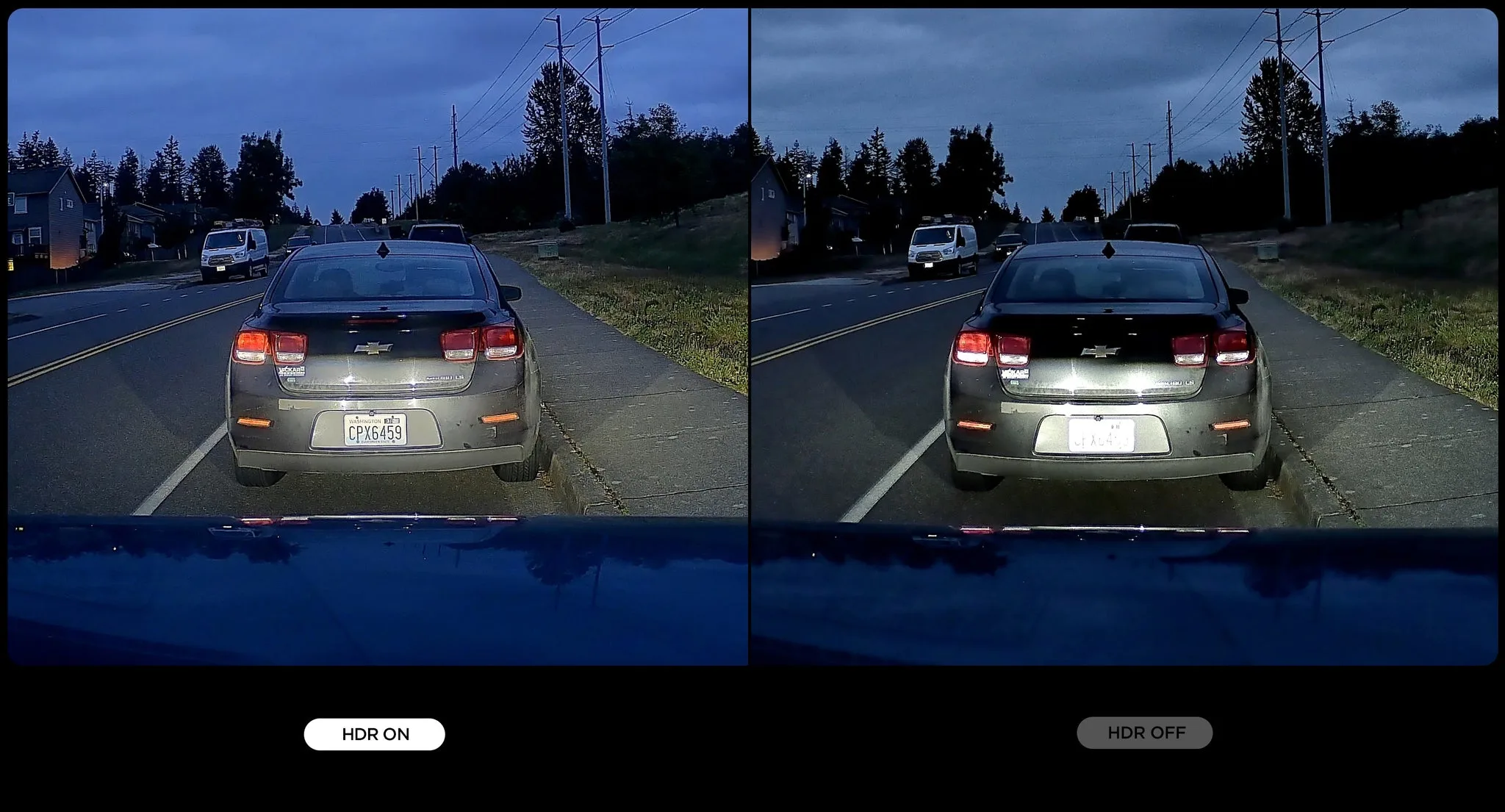
Front and rear HDR help manage strong contrast from headlights, reflective number plates, tunnels and changing road light.
The A229 Ultra combines two 1/1.8-inch Sony STARVIS 2 IMX678 sensors with HDR on both channels. The result is the same imaging platform front and rear, with more useful detail in low light, motion and high-contrast scenes.
Both the front and rear cameras use Sony's IMX678 STARVIS 2 sensor. Each is a 1/1.8-inch 8MP sensor capable of native 4K recording, so rear footage gets the same sensor size and pixel count as the road ahead.
Native 3840×2160 recording gives both channels more recorded detail than a 2K secondary camera, particularly useful when reviewing vehicles and number plates further from the lens.
The IMX678 sensors are designed for a wider dynamic range and stronger low-light performance, helping retain a cleaner image as available light falls.
Better sensor performance helps moving vehicles, road markings and number plates remain more usable when the scene itself is moving quickly.
HDR works on both channels to manage bright and dark areas within the same frame, including headlights, tunnels and reflective number plates.



HDR is available on both 4K channels. It combines exposures to preserve more useful information across high-contrast scenes instead of forcing the camera to choose between the brightest and darkest areas.
Dual 4K creates substantial files, so the A229 Ultra gives you both dual-band Wi‑Fi for everyday app access and direct USB-C transfer when you want a faster wired route.
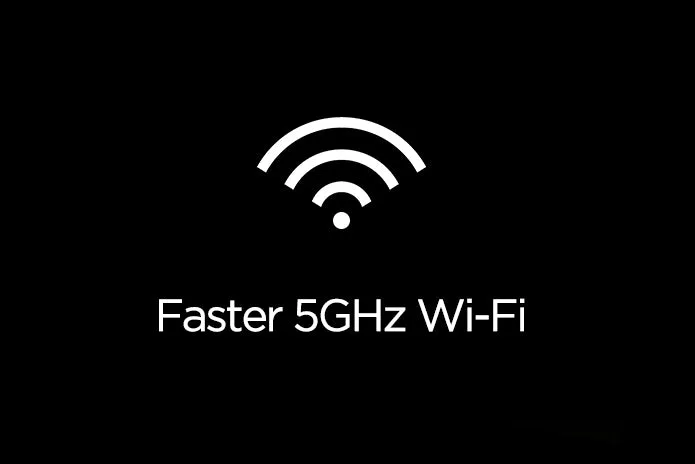
The built-in dual-band Wi‑Fi connection links the A229 Ultra to the VIOFO App for live view, settings, playback and downloads. The 5GHz band is the faster option for moving and previewing larger video files, while 2.4GHz remains available for compatibility.
Connect a compatible phone with a USB 2.0 Type-C to Type-C data cable to browse and copy photos or video directly. Transfer speeds can reach up to 20MB/s on compatible hardware, and the same connection can be used for firmware updates.
The phone must support USB 2.0 data and be capable of 5V / 2A output. Compatibility depends on the phone and cable used.
Connect the camera to the VIOFO App for live view, settings, playback and downloads. For larger dual-4K files, direct USB-C transfer provides an alternative route.
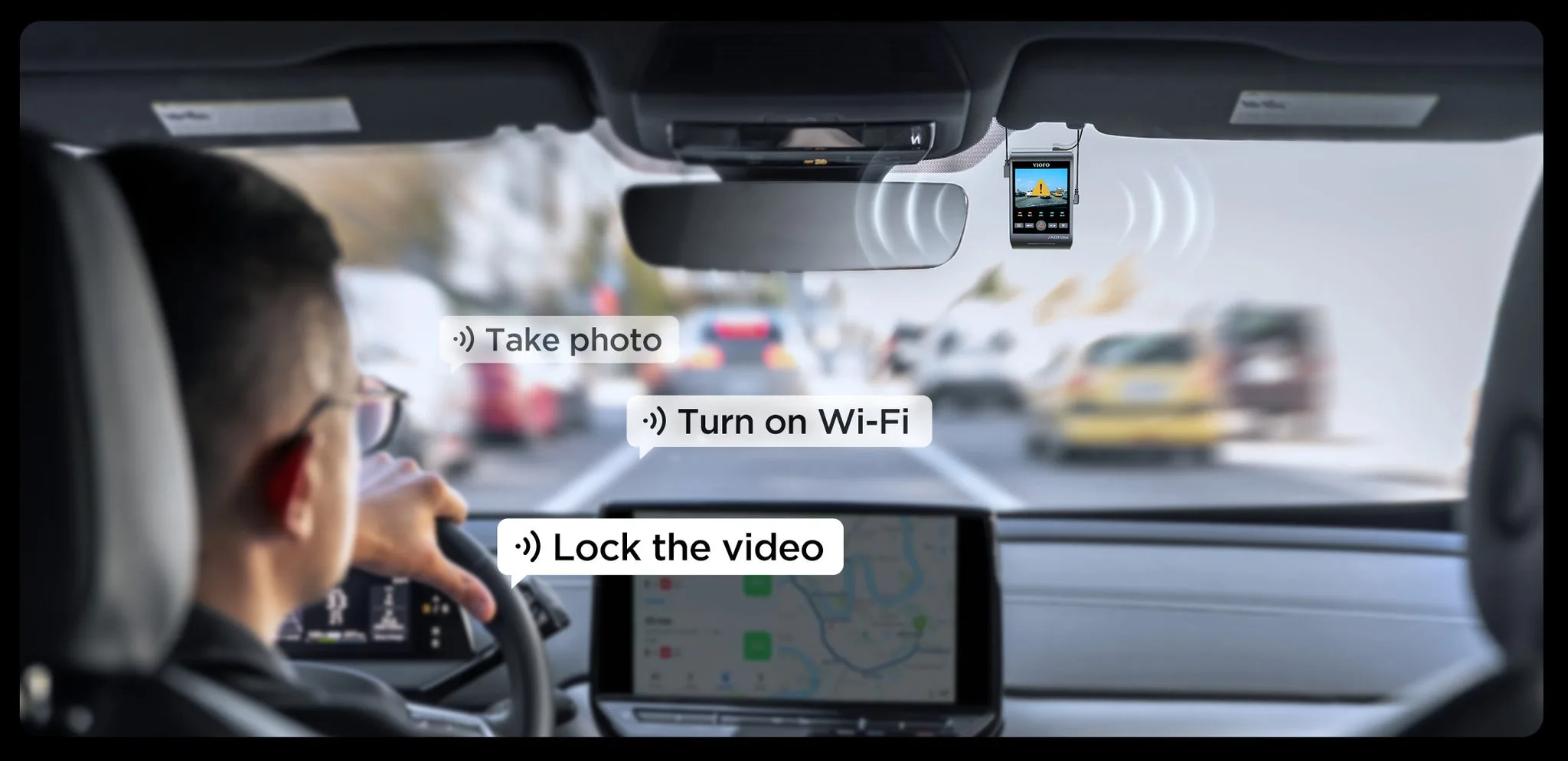
Voice commands can start recording, take a photo and switch Wi‑Fi on or off. Spoken notifications also report settings changes and problems such as a memory-card error, reducing the need to look at the screen while driving.
Voice control is supported in English, Chinese, Russian and Japanese.
Parking mode requires a compatible HK4/HK6 hardwire kit or a suitable dash-cam battery pack. The hardwire kit is sold separately and is not part of the standard package.
Use buffered event detection when you want incident-focused files, low bitrate when you want continuous audio/video, or time-lapse when storage and power efficiency matter most.
Choose a hardwire kit for vehicle-powered automatic switching, or a compatible VIOFO battery pack when you want parking recording isolated from the vehicle battery.
Time-lapse parking records without audio at 1, 2, 3, 5 or 10 frames per second. Lower frame rates reduce storage and power use while still maintaining a visual record of what happened around the vehicle.
Super Night Vision works within time-lapse parking mode to improve low-light scenes when the vehicle is left overnight or in darker locations.

When a moving object or event is detected, buffered parking recording can preserve footage from 15 seconds before the trigger and continue for 30 seconds afterwards. That gives the event context rather than starting only after detection.

Low Bitrate mode records continuously with audio but reduces the bitrate, producing smaller files for longer parking sessions. It is useful when continuous context matters more than event-only recording.
Recording continues throughout the parking session rather than waiting for an event trigger.
Unlike time-lapse parking, Low Bitrate mode keeps audio while reducing file size.
These are the everyday features that make the camera useful after an incident: loop recording, automatic file protection, location data and storage designed for constant writing.
Loop recording continuously overwrites the oldest normal files as the card fills. Choose 1, 2, 3, 5 or 10-minute loops. The built-in G-sensor can automatically lock the current footage when an impact is detected so it is not removed by normal looping.
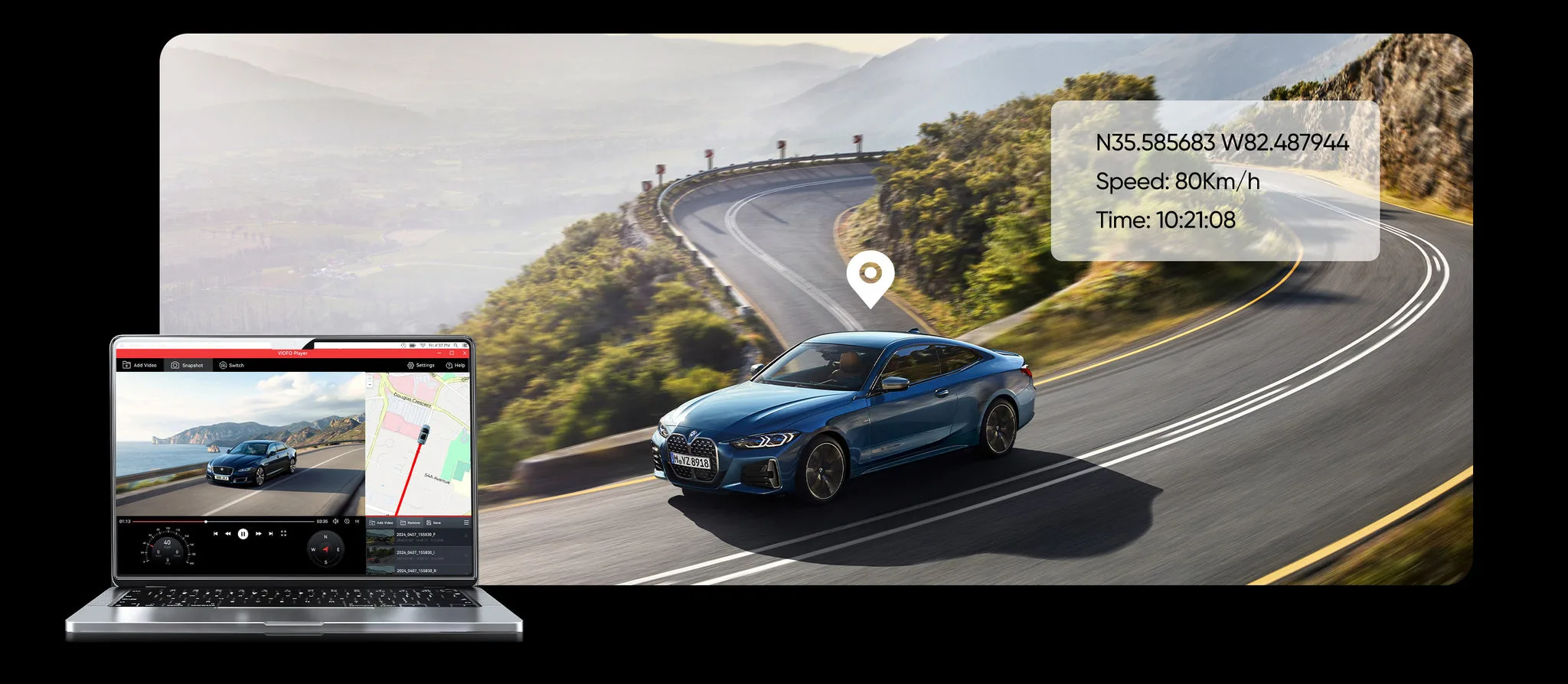
Built-in positioning supports GPS, BEIDOU, GALILEO and GLONASS. Location, speed and time data can be reviewed alongside recorded video in the VIOFO App or on a computer.
When using the VIOFO App to view the GPS map, download the video to the phone first.
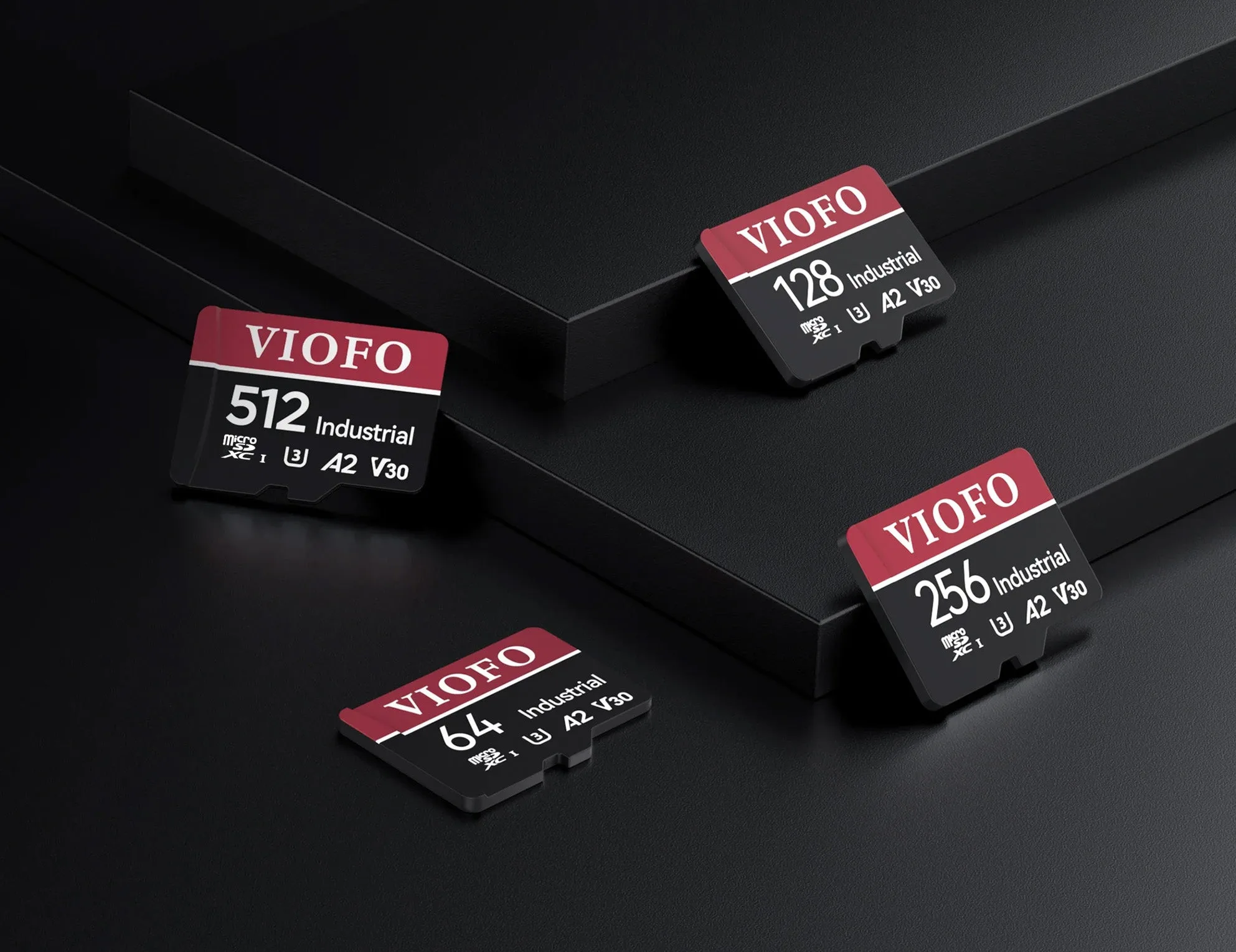
The A229 Ultra supports microSD cards up to 512GB. Use a high-endurance card built for continuous video writing; ordinary consumer cards can fail much sooner under non-stop dash-cam workloads.
No microSD card is included as standard. A 256GB card provides roughly 8–12 hours of continuous dual-4K recording depending on settings and scene complexity; use 512GB when you want the longest recording window before normal looping begins to overwrite old files.
No internal lithium battery. The supercapacitor is designed for in-vehicle use across a published operating range of -20°C to 65°C.
The built-in 2.4-inch screen gives direct access to recording status, playback and settings without requiring the app for every adjustment.
Audio can be recorded alongside video and can be controlled through the camera settings or supported shortcut controls.
The speaker provides camera sounds and spoken notifications, including status changes and memory-card warnings.
This overview shows the dual-4K recording system, image-quality features, connectivity and parking functions.
The video covers dual 4K recording, Sony STARVIS 2 imaging, HDR, parking protection, 5GHz Wi‑Fi, GPS and voice control.
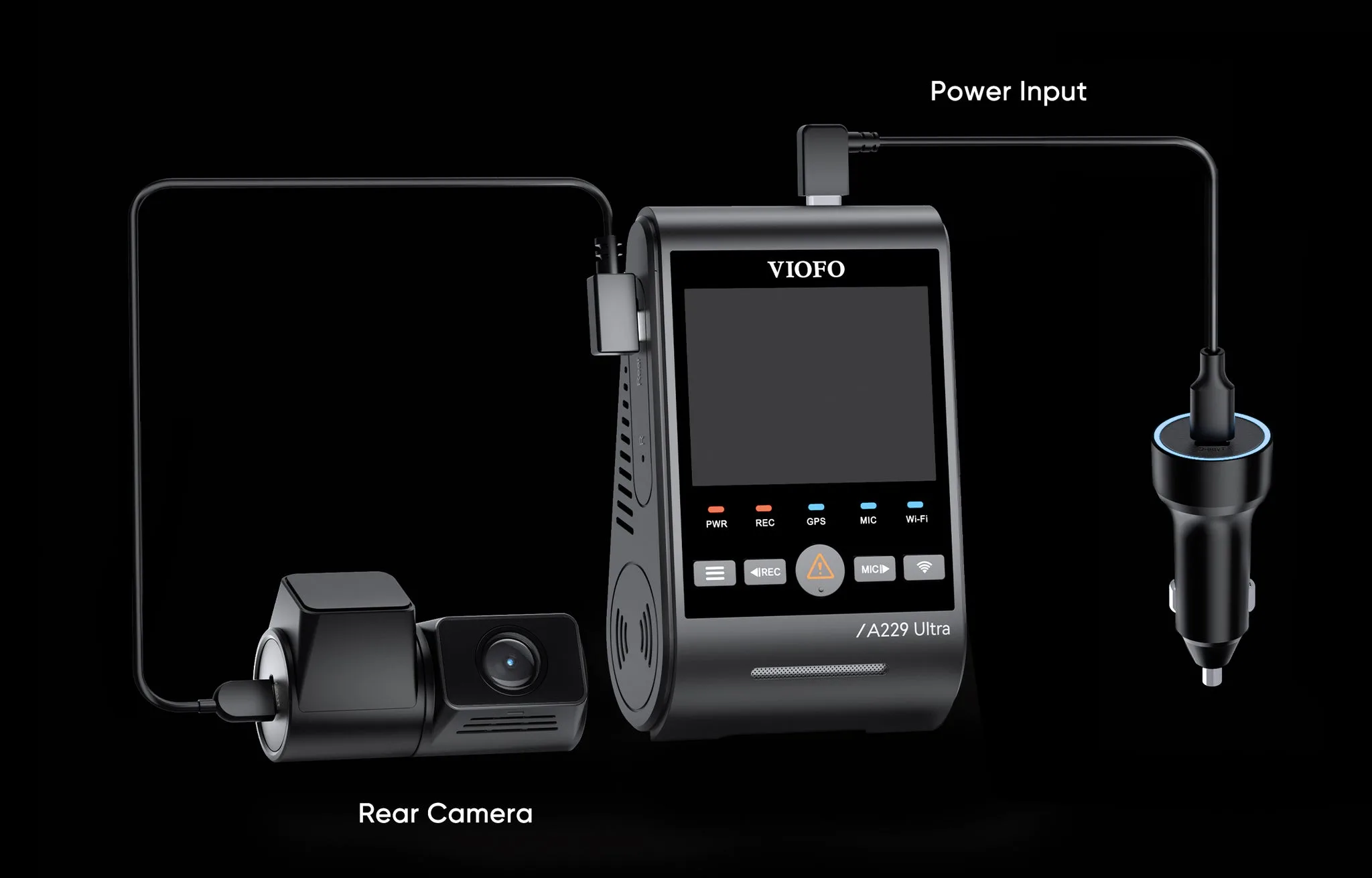
The front unit mounts with its GPS base, the rear camera connects with a 6m cable, and the supplied front CPL can be fitted from day one. Add a hardwire kit for parking mode, a rear CPL for glare reduction behind the car, or the BTR200 remote for one-touch clip protection.
The front camera mounts to the windscreen using the supplied GPS mount. A 6m rear-camera cable runs to the rear unit, while the supplied 3.5m car-charger lead powers normal driving operation. Static windscreen stickers and a trim tool are included to make a clean install easier.
A CPL filter reduces glare and reflections from glass and road surfaces. The front CPL-200 is included in the box. The rear camera also supports a CPL filter; the compatible CPL-600 is sold separately.
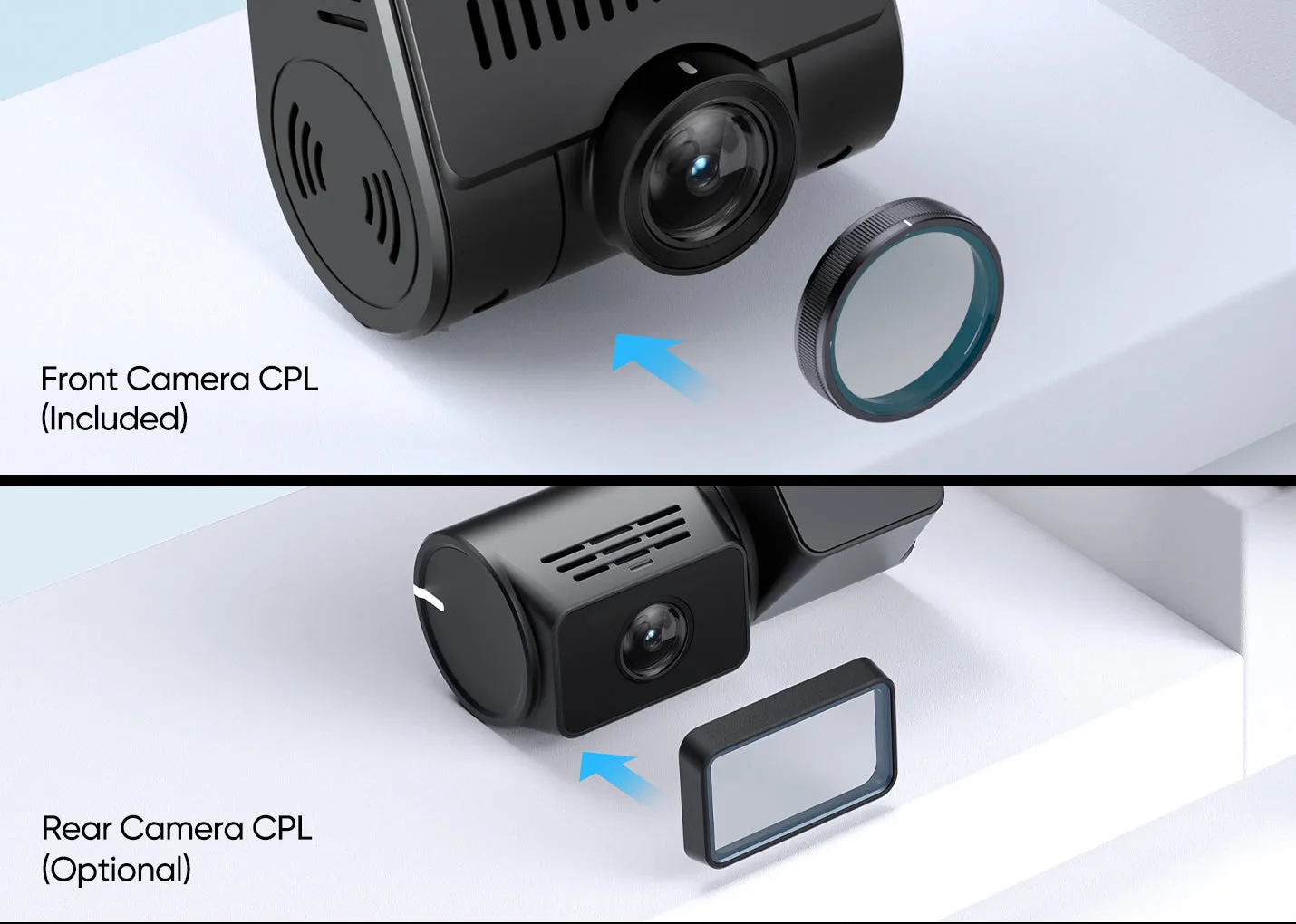
The CPL sits over the lens and reduces reflections before they become part of the recorded image.
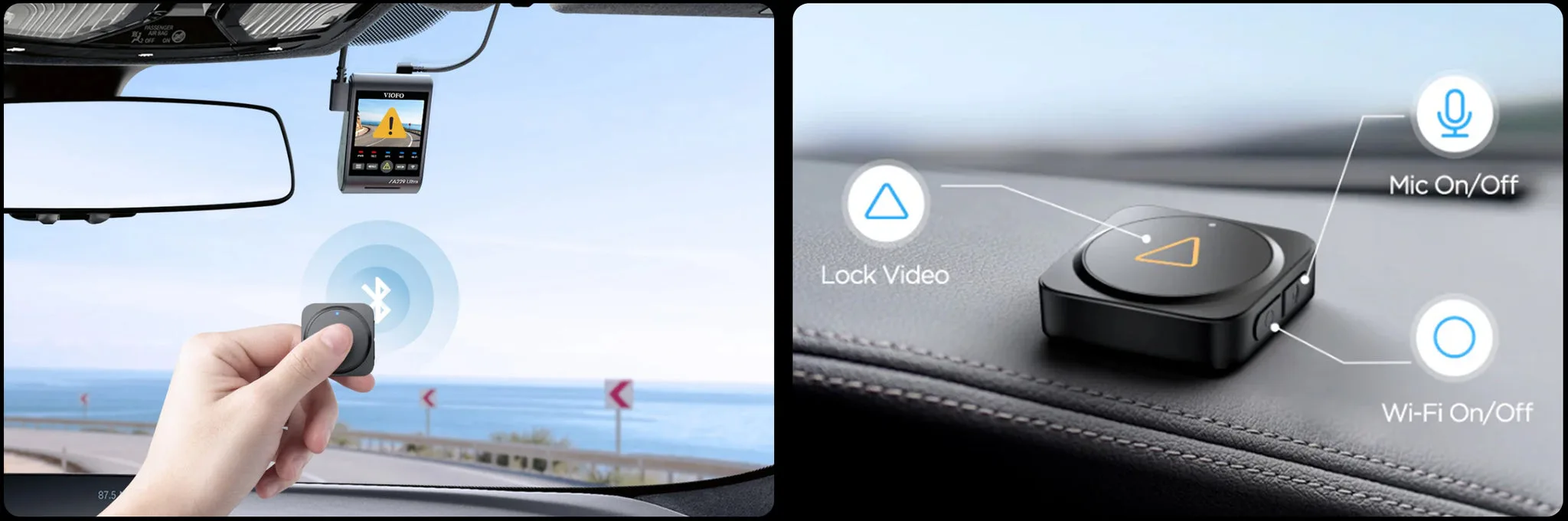
Mount the optional BTR200 within easy reach. Press the centre button to lock and protect the current video clip and image; the two side buttons can be assigned to different shortcut functions. The quoted control distance is up to 5 metres.
HK4 is a compatible USB-C ACC hardwire kit for automatic parking-mode switching and low-voltage protection.
HK6 is also compatible. Choose the appropriate kit for the installation and fuse-box setup.
Add the optional rear CPL when reflections through the rear glass are a problem in your vehicle.
Optional Bluetooth control for one-press file protection and configurable shortcut buttons.
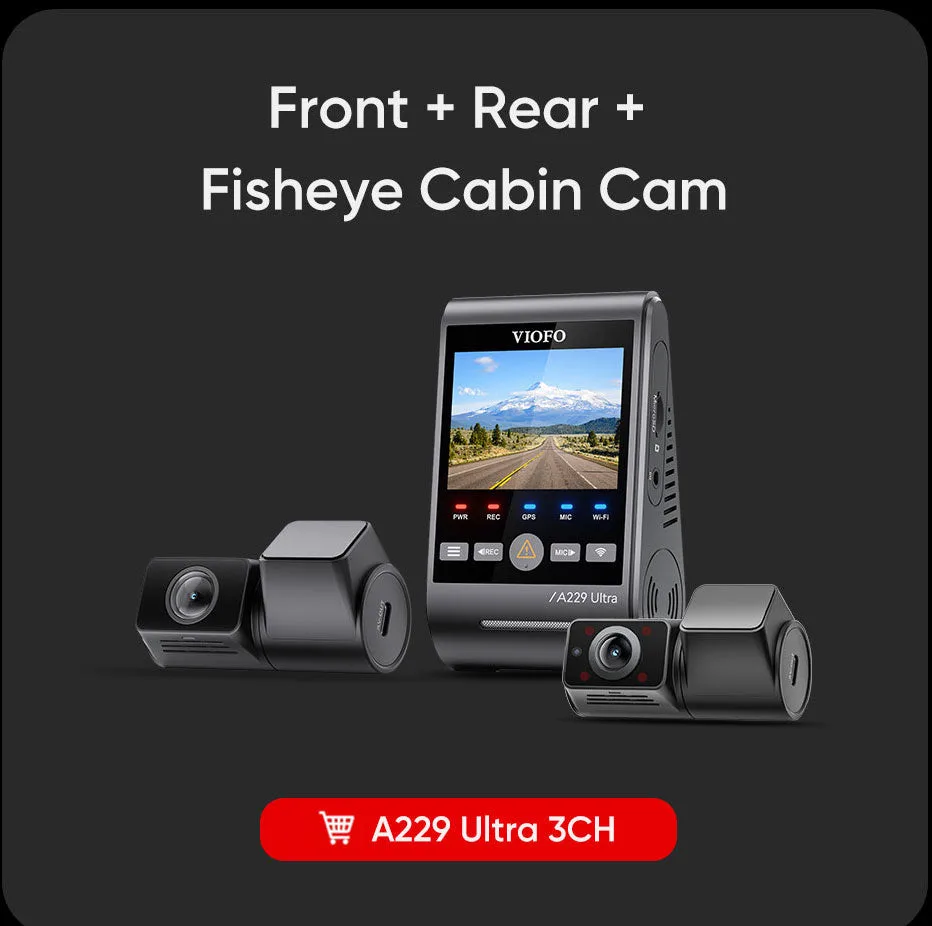
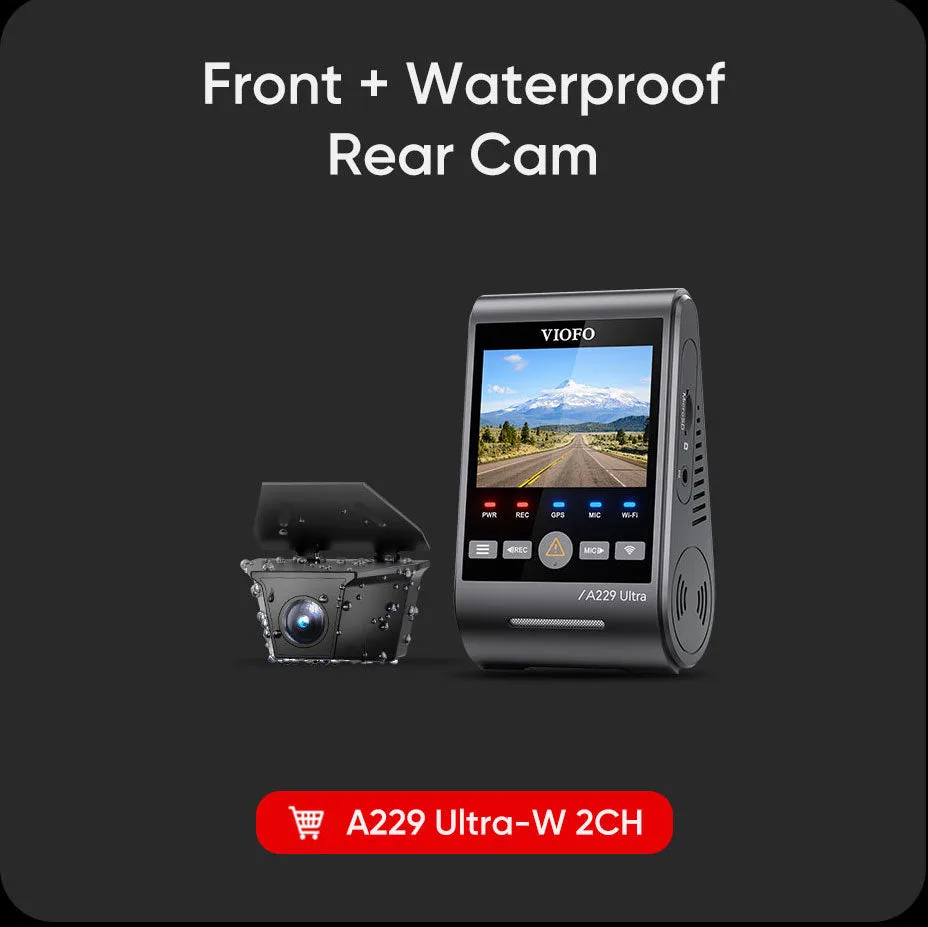
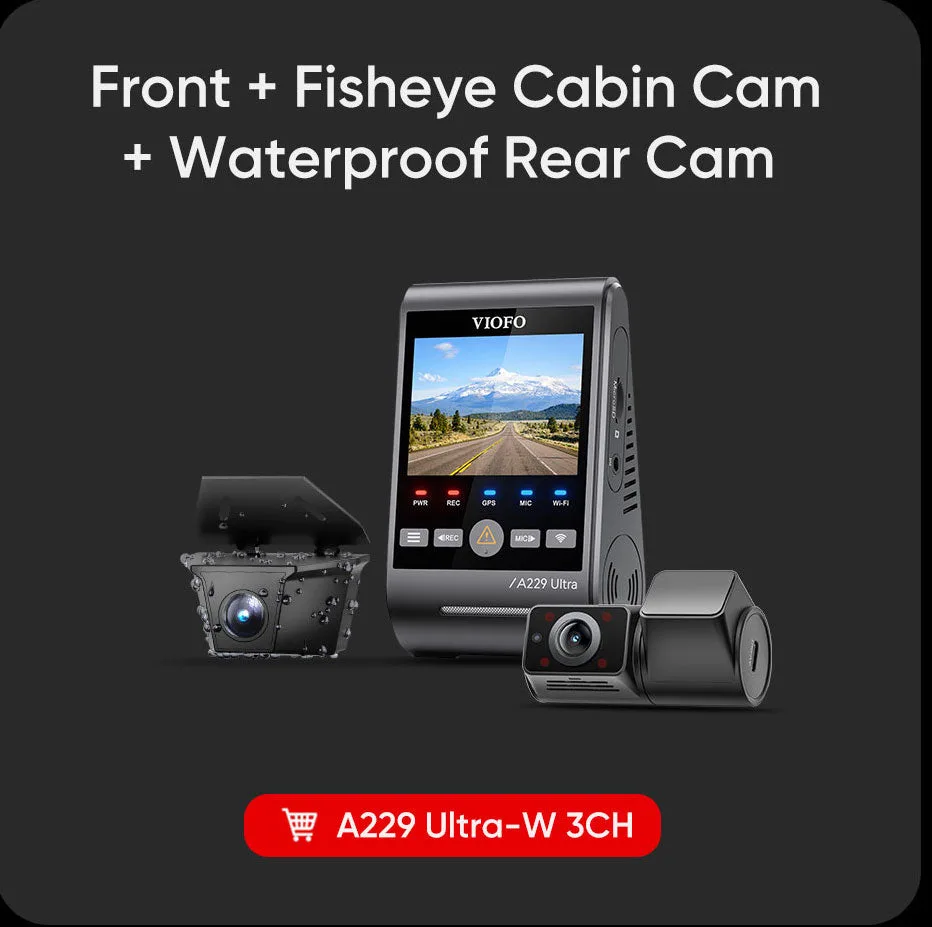
The A229 Ultra range also includes a 3-channel cabin-camera configuration and waterproof rear-camera editions for vehicles where the rear camera needs to mount externally.
Dual IMX678 sensors give the Ultra native 4K at both ends.
The A229 Pro pairs an IMX678 4K front camera with an IMX675 2K rear camera.
The A229 Plus uses IMX675 sensors front and rear for a dual-2K configuration.
An optional 1080P infrared fisheye cabin camera can expand the Ultra platform to front + rear + cabin coverage.
The feature story above covers how the camera behaves. These sections keep the complete technical specification available without turning the main page into a data sheet.
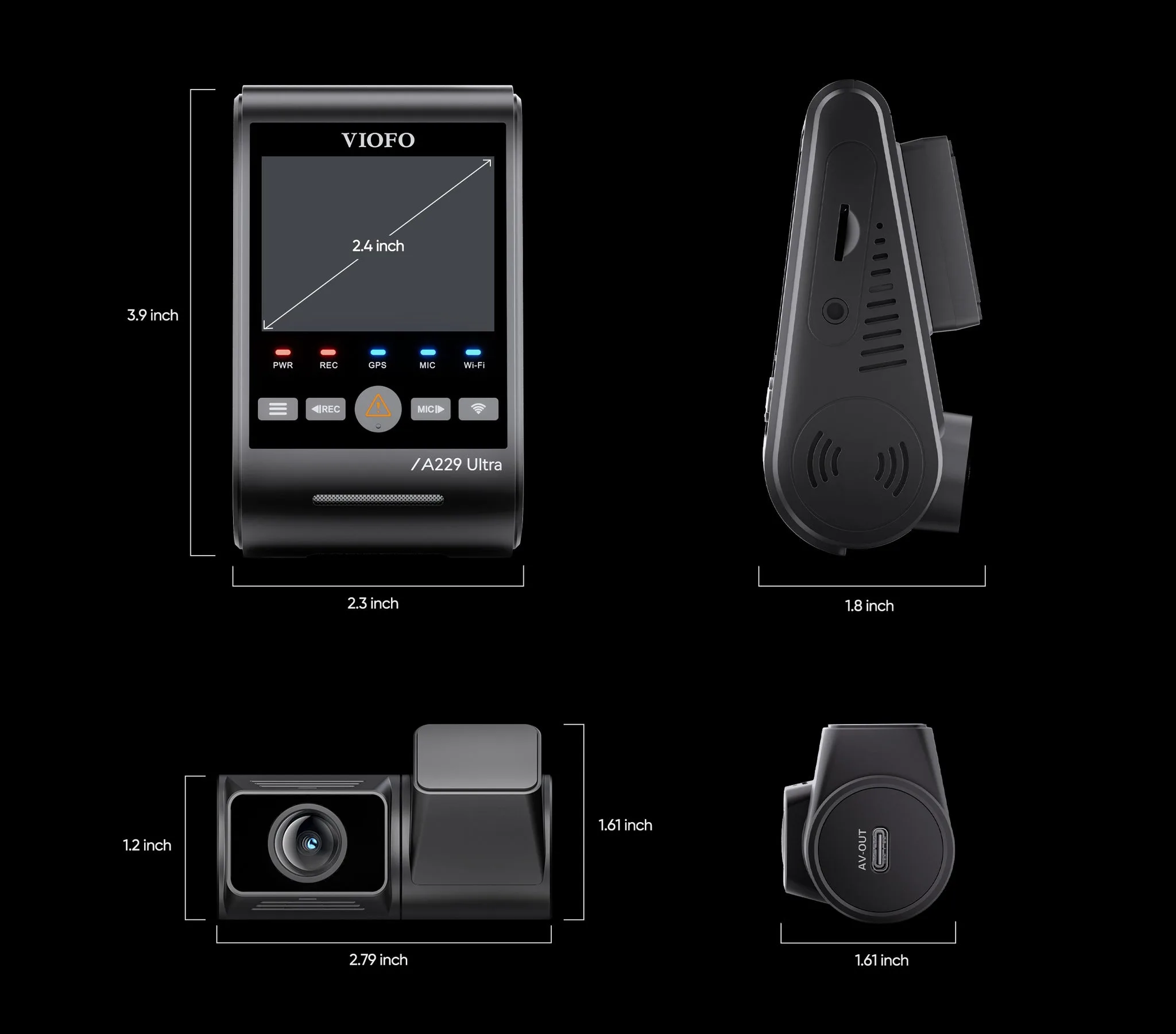
Front: 2.3 × 3.9 × 1.8 in · Rear: 2.79 × 1.2 × 1.61 in
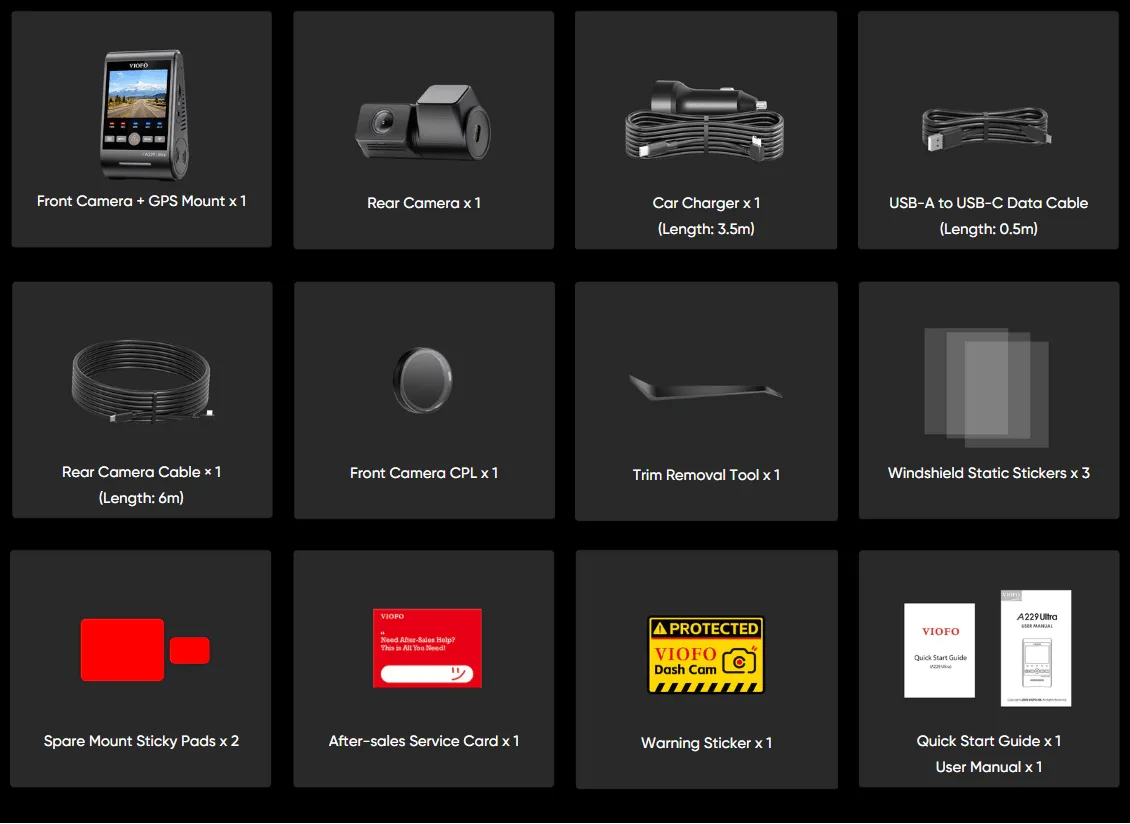
A microSD card, rear CPL-600, HK4/HK6 hardwire kit and BTR200 Bluetooth remote are optional and sold separately unless specifically bundled.
The main difference is the rear camera. The A229 Pro records 4K front + 2K rear using IMX678 + IMX675 sensors. The A229 Ultra uses dual IMX678 sensors for 4K front + 4K rear. Both platforms support HDR, dual-band Wi‑Fi, GPS, voice control and CPL filters.
Yes. Front and rear can both record 3840×2160 at 30fps simultaneously, with HDR supported on both channels. Both cameras use Sony STARVIS 2 IMX678 8MP sensors.
Yes. An optional 1080P infrared fisheye cabin camera can expand the platform to 4K front + 4K rear + 1080P cabin recording.
Yes. With a compatible HK4/HK6 hardwire kit or suitable dash-cam battery pack, the camera supports buffered Auto Event Detection, Time-Lapse recording and Low Bitrate continuous recording.
When an event is detected, the buffered mode can retain footage from 15 seconds before the trigger and continue recording for 30 seconds after, giving the event useful context.
Super Night Vision is used with Time-Lapse parking recording to improve low-light scenes. Time-lapse can be set to 1, 2, 3, 5 or 10fps and records without audio.
A 256GB card provides roughly 8–12 hours of continuous dual-4K recording depending on settings and scene complexity. The maximum supported capacity is 512GB. Use a high-endurance microSD card designed for continuous video writing.
No. A microSD card is optional and sold separately. The camera supports cards up to 512GB.
Yes. The front CPL-200 is included. The rear camera also supports a CPL filter, but the compatible CPL-600 is optional.
Yes. Use the VIOFO App over 2.4GHz/5GHz Wi‑Fi or connect a compatible phone with a USB 2.0 Type-C to Type-C data cable. Direct USB transfer can reach up to 20MB/s on compatible hardware.
Voice control supports English, Chinese, Russian and Japanese. Spoken notifications can also report status changes and memory-card errors.
Yes. Bluetooth is built in and the optional BTR200 is supported. Its centre button can lock the current clip and image, while the side buttons can be assigned shortcuts. The quoted control distance is up to 5 metres.
The main dual-channel mode is 4K30 + 4K30. The specification also includes 4K 21:9 + 4K 21:9 and 1080p30 + 1080p30.

Copyright © 2026 VIOFO UK. All rights reserved